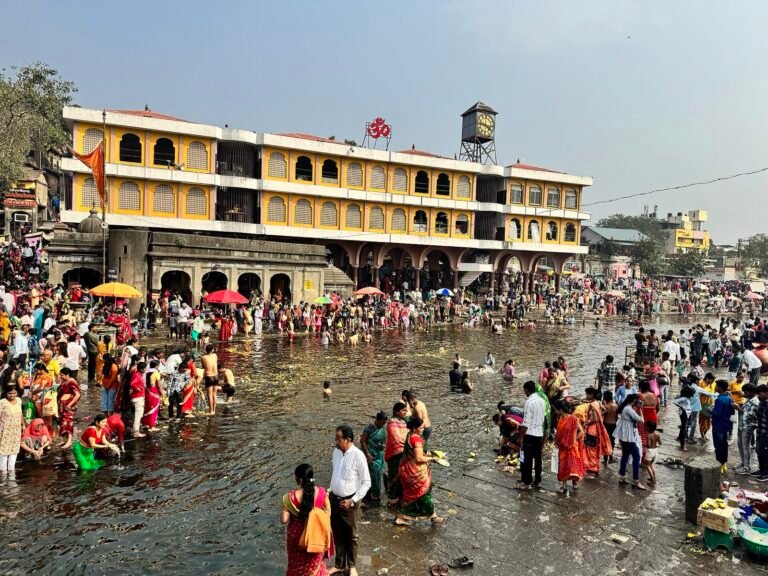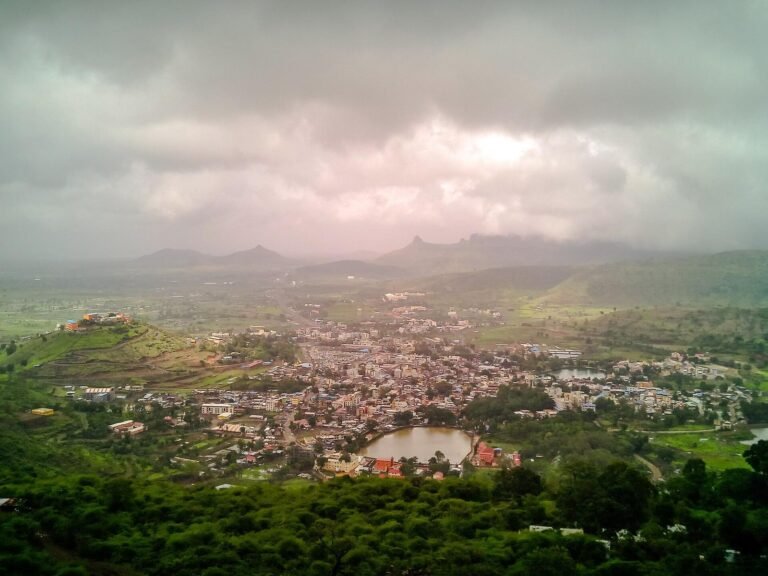
The first Amrit Snan of the Nashik and Trimbakeshwar Simhastha is on Monday 2 August 2027, the new moon that ends the month of Ashadha in Maharashtra’s calendar. In tradition the day carries three meanings at once: it is the lamp new moon of Maharashtra, a new moon on a Monday, and the first great bath of the year in which Jupiter is in Simha.
| Question | Answer |
|---|---|
| Date | Monday 2 August 2027, at Ramkund in Nashik and Kushavarta in Trimbakeshwar |
| Tithi | Ashadha Amavasya, the new moon, until 3:34 pm at Nashik |
| Same night in North Indian calendars | Shravana Amavasya |
| Sun and Moon | Both in Karka (Cancer) |
| Also kept as | Deep Amavasya (Divyachi Amavas) in Maharashtra; a Somvati Amavasya, because it falls on a Monday |
The date is in the Kumbh Mela Authority’s plan of 15 June 2026, which the authority marks as interim. The tithi, the month names and the signs are from the Tirth panchang for Nashik.
Ashadha Amavasya or Shravana Amavasya?
Both names are right. Maharashtra follows the amanta calendar, in which each month ends on the new moon. In that reckoning this new moon closes Ashadha, and Shravan begins the next day. Uttar Pradesh, Uttarakhand and Madhya Pradesh follow the purnimanta calendar, in which months end on the full moon, so there the same night already falls in Shravan.
That is why the Tirth panchang lists the day as Ashadha in the amanta month and Shravana in the purnimanta month, and why a calendar from Uttar Pradesh or Madhya Pradesh may call it Shravana Amavasya. Only the name changes. The date of the bath is the same.
One night, two month names
| What | Amanta | Purnimanta |
|---|---|---|
| A month ends on | The new moon | The full moon |
| Followed in | Maharashtra | Uttar Pradesh, Uttarakhand and Madhya Pradesh |
| 2 August 2027 is | Ashadha Amavasya, the new moon that closes Ashadha | Shravana Amavasya, already in Shravan |
Deep Amavasya: the lamp new moon
In Maharashtra this new moon has a household ritual of its own. The Hitavada, a Nagpur daily, describes Divyachi Amavas, the lamp new moon: families take out the lamps of the house, clean them, worship them and light them again in the evening. The lamp stands for fire, one of the five elements. The next day the month of Shravan begins.
The same new moon goes by other names elsewhere. The paper lists Chukkala Amavasya in Andhra Pradesh and Telangana, Bheemana Amavasya in Karnataka, and Hariyali Amavasya in Gujarat and North India. In 2027 the first Amrit Snan and Deep Amavasya fall on the same day.
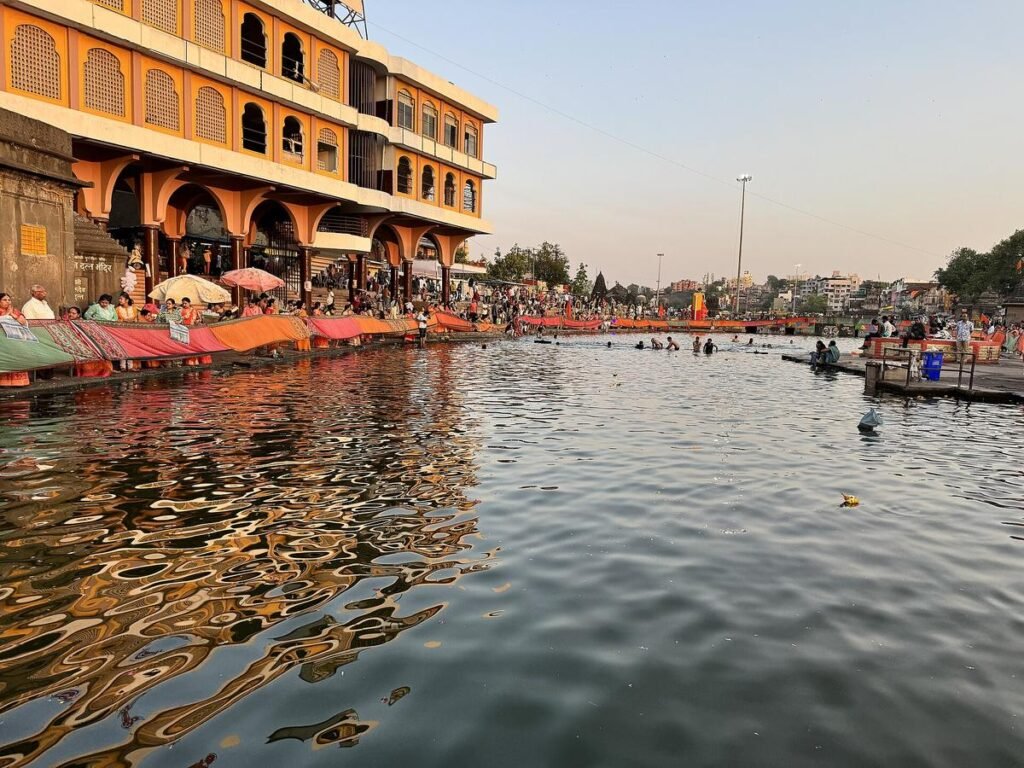 Photo: Rohit R Nashik, CC BY-SA 4.0, via Wikimedia Commons
A new moon on a Monday
Because the new moon falls on a Monday, the day is also what is called a Somvati Amavasya. According to an IANS report, Somvati Amavasya is considered especially powerful among the year’s new moons. It is a day for rites for ancestors, such as tarpan, and devotees believe a river bath on it brings peace and spiritual growth. The authority has not said whether this played any part in the choice of date.
Why it opens the Simhastha’s bathing season
The Simhastha takes its name from Simha, the sign Leo. The Nashik district’s account of the Kumbh describes the sky for Nashik and Trimbakeshwar as Jupiter in Simha, with the Sun and the Moon in Karka. On this new moon the Tirth panchang places both the Sun and the Moon in Karka at Nashik, so the first bath matches the district’s description of the Simhastha sky. See why it is called Simhastha for the twelve-year rule behind the name.
Tradition also says why the river matters in this year. The Gazetteer of Nasik, published in 1883, records the local belief that in the Sinhasth year, when Jupiter enters the sign of the Lion, the Godavari gains such special holiness that even the Ganga, the Narmada, the Yamuna and the Sarasvati come to bathe in it. The Kumbh Mela Authority’s plan adds the Kumbh story: according to mythology, it says, drops of amrit fell at Ramkund after the churning of the ocean.
The 2027 schedule itself was announced in June 2025 after a meeting in Nashik chaired by the Chief Minister and attended by seers of all 13 akharas and the Purohit Sangh.
Go deeperWhy we do not give an official reason for the date1 min read
The reports of the June 2025 meeting give no reason for each date, so the meanings above are what tradition and the calendar say about the day, not an official explanation.
One day, both centres
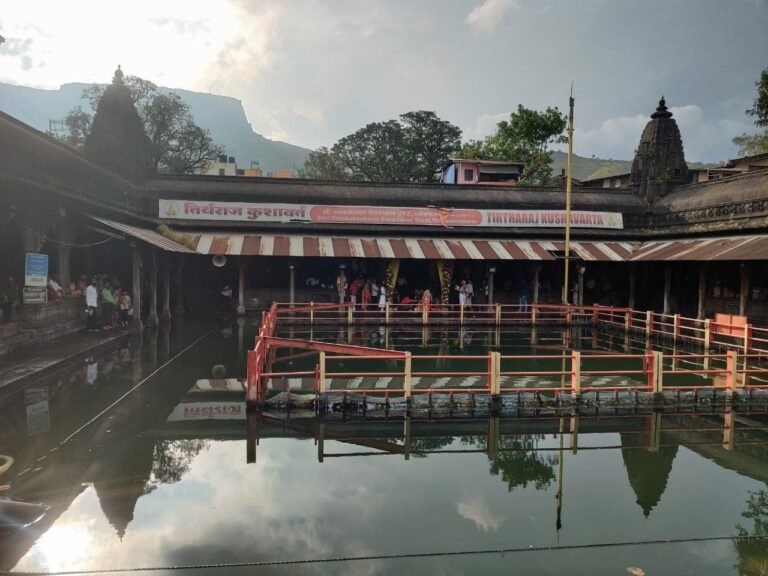
The first Amrit Snan is held on the same day at both centres: at Ramkund in Nashik, where the Vaishnava akharas bathe, and at Kushavarta in Trimbakeshwar, where the Shaiva and Udasin akharas bathe, according to the Nashik district. It comes four days after the Nagar Pradakshina on 29 July 2027. Only the third Amrit Snan is split by centre.
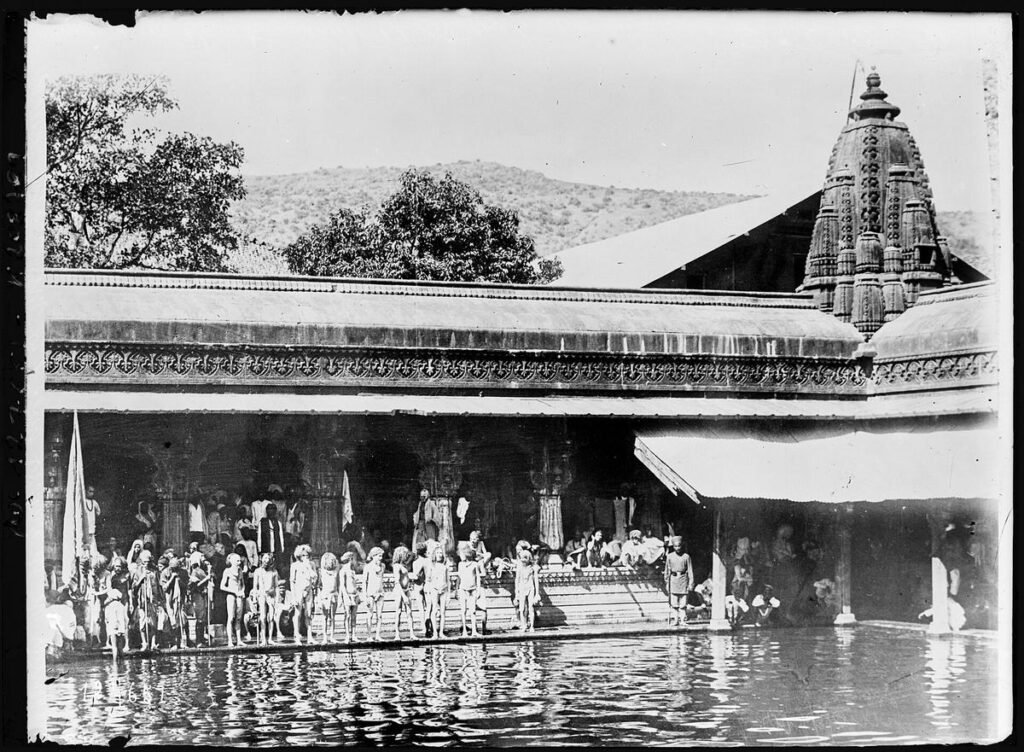 Kushavarta Kund at Trimbak, photograph by the Central News agency, 1928, Bibliothèque nationale de France. Public domain, via Wikimedia Commons
Amrit Snan days usually draw the most pilgrims; follow police and mela instructions on the day. For what has been announced and how to plan, see the 2 August Amrit Snan page. To choose a centre, read Ramkund or Kushavarta, and for the name of the bath itself, Amrit Snan or Shahi Snan.
Plan your trip
Sources
9 sources · checked 16 Oct 2026
- Kumbh Mela Plan (First Edition), Nashik Trimbakeshwar Simhastha Kumbh Mela 2027: schedule, framework, chapters and financial outlays · Nashik-Trimbakeshwar Kumbh Mela Authority, Office of the Divisional Commissioner, Nashik, Government of Maharashtra ·
- Nashik Kumbh Mela 2027 Dates Announced · Patrika (Patrika Desk) ·
- Simhastha Kumbh Mela to begin in Nashik-Trimbakeshwar on Oct 31 next year · Press Trust of India (via The Week) ·
- Panchang for Nashik on the 2027 Amrit Snan days (Tirth panchang) · Tirth.com ·
- Hindu calendar · Encyclopaedia Britannica (Charles Preston and Britannica Editors) ·
- Divyachi Amavasya: A forgotten tradition in State · The Hitavada (Rajendra Diwe) ·
- Devotees throng holy rivers nationwide on auspicious occasion of Somvati Amavasya · IANS ·
- Culture and Heritage: Simhastha Kumbhamela, the Nashik-Trimbakeshwar Kumbh and its astrological aspect (Nashik district) · District Administration, Nashik, Government of Maharashtra ·
- Gazetteer of the Bombay Presidency, Volume XVI: Nasik (1883), the Sinhasth at Nasik and Trimbak · Government of Bombay, Government Central Press; scan by Cornell University Library on the Internet Archive ·