Choose Ramkund in Nashik city for a base among the Ramayana sites of Panchavati, and Kushavarta at Trimbakeshwar, about 30 km away, if your pilgrimage centres on the Trimbakeshwar Jyotirlinga. They are two different kinds of sacred water: a pool in the river where Rama is held to have bathed, and a stone kund in the town where, by tradition, the Godavari comes out again after vanishing on Brahmagiri hill.
Ramkund: a pool in the river at Nashik
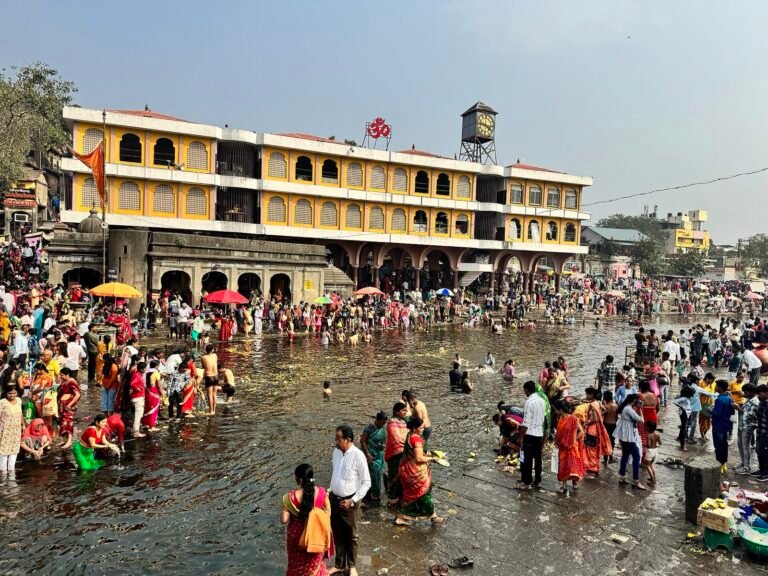
Ramkund lies on the Godavari in Panchavati, in the heart of Nashik. The Nashik district calls it the holiest spot in the city, believed to be where Bhagwan Ram used to bathe during his exile. It is one of a chain of pools built into the riverbed. The Gazetteer of Nasik, published in 1883, lists them in order, among them Lakshman’s Pool, Ram’s Pool, Sita’s Pool, a pool built by Ahilyabai of Indore, the Ramgaya Pool and the Mukteshvar Pool, and names Ram’s Pool as the holiest.
The same Gazetteer says Ram’s Pool was built in 1696 by Chitrarav, a landholder of Khatav in Satara, and repaired in 1782 by Gopikabai, mother of the fourth Peshwa. It also records a belief from the Puranas: the Godavari bends to the south as it enters the city, and the river is held to be especially holy where it flows south. Because the pools sit in the riverbed, the small shrines facing them go under water when the river is high.
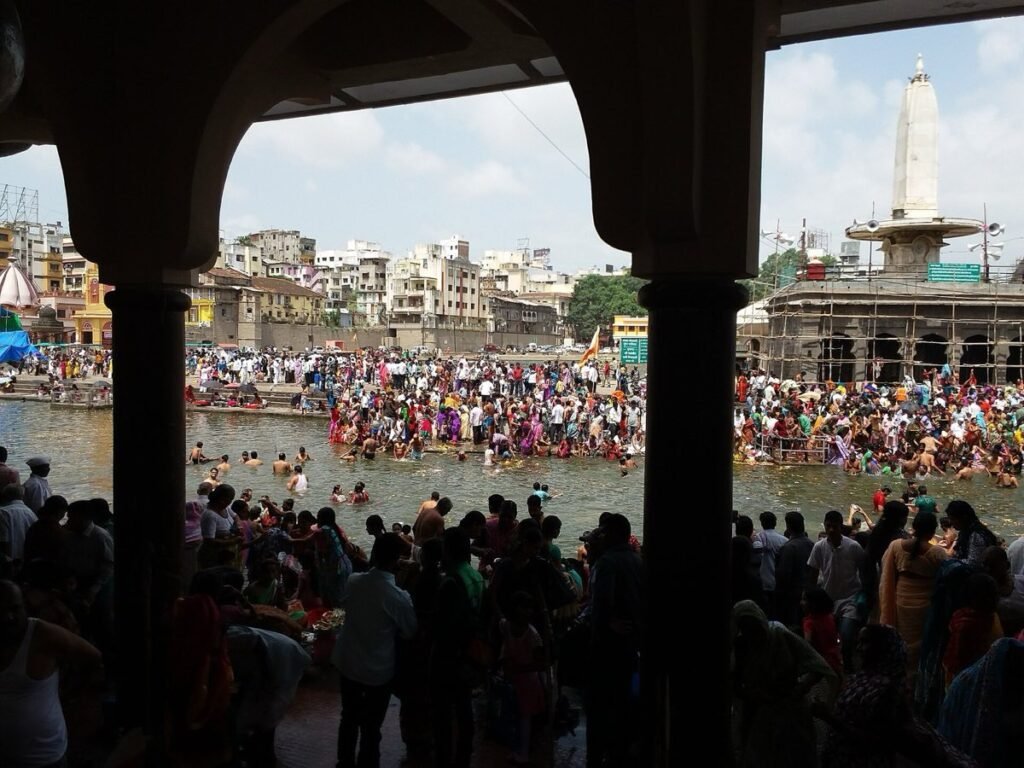 Photo: Mahi29, CC BY-SA 4.0, via Wikimedia Commons
Ramkund holds the Asthivilaya Tirth, the pool where bones are believed to dissolve, and families bring the ashes of relatives to immerse there, the district says. The Gazetteer described the same practice in 1883, with family priests at Ramkund keeping record books of the families they served, the earliest entry it found dating from 1572.
Kushavarta: a kund at the river’s source
Kushavarta, also written Kushavart, is in the centre of Trimbakeshwar town, about 400 metres from the Trimbakeshwar temple. The Nashik district describes a kund about 21 feet deep, built in 1750 and fed by groundwater. It is not part of a riverbed. According to tradition, the Godavari rises on Brahmagiri hill above the town, disappears, and comes out again here, which the district says gives the kund its special holiness.
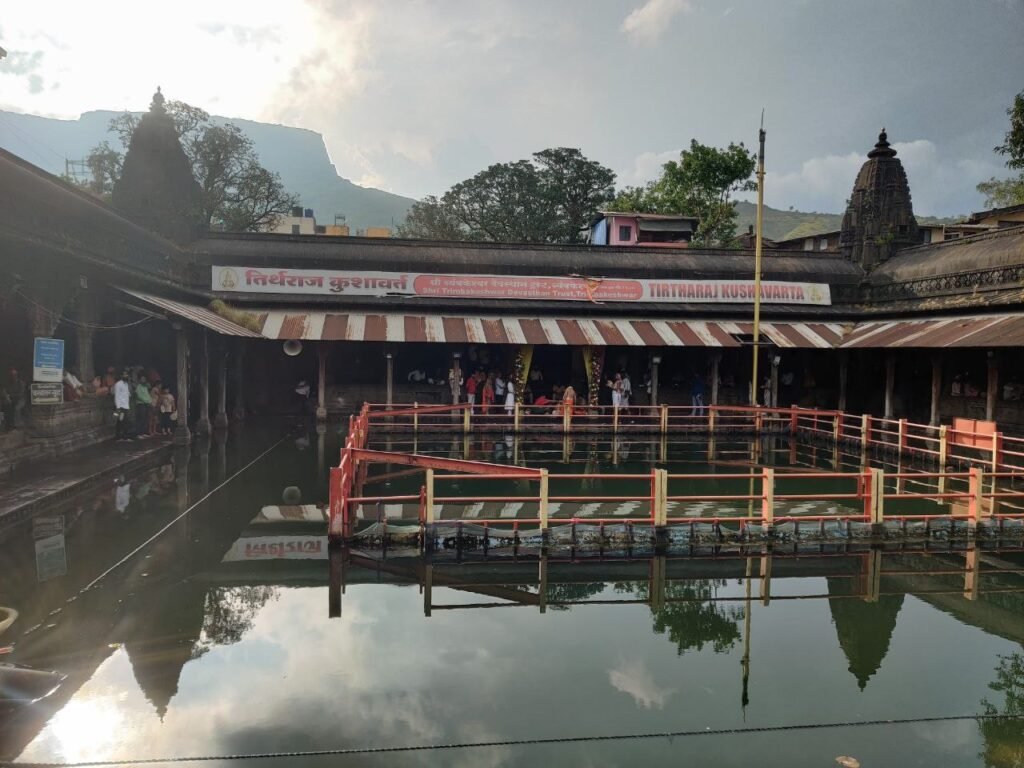 Photo: Studio Gestalt, CC BY-SA 4.0, via Wikimedia Commons
The name comes from a story the 1883 Gazetteer recorded. When Shiva released the river for the sage Gautama, Gautama turned the falling water with a blade of kusha grass, and the pool where it turned became the Kushavarta. The Gazetteer says the same legend explains why a great fair is held here once every twelve years, when the Sun enters Leo.
Devotees bathe at Kushavarta before going to the temple for darshan, Maharashtra Tourism notes. The Brahmagiri pradakshina, a barefoot walk of about 40 km around the hills in the month of Shravan, starts from the kund, according to the Ministry of Tourism. The 1883 Gazetteer also recorded pilgrims bathing here before performing shraddha, the rites for ancestors.
Going to the Kumbh? Tirth.com can plan it for you. We are taking bookings for the Kumbh, with packages, our own people on the ground and help from your first call to the bath. Leave your number and our yatra team will call you back.
- Stay and travel planned around your bathing day
- Our own people on the ground at the mela
- No payment to enquire
Calls between 10:30 am and 7:30 pm IST, usually the same working day.
From Tirth.com, which runs this guide · How this works
The two waters side by side
| What | Ramkund | Kushavarta |
|---|---|---|
| Where | Panchavati, Nashik city, on the Godavari | Centre of Trimbakeshwar town, about 400 m from the temple |
| What it is | A pool built in the riverbed, one of a chain of kunds | A stone kund about 21 feet deep, built in 1750 and fed by groundwater |
| In tradition | Where Rama bathed during his exile | Where the Godavari comes out again after vanishing on Brahmagiri |
| Rites | Bathing, and immersion of ashes at the Asthivilaya Tirth | Bathing before darshan, rites for ancestors, and the start of the Brahmagiri pradakshina |
| In the Simhastha | Vaishnava akharas bathe here | Shaiva and Udasin akharas bathe here |
| 2027 Amrit Snans | Mon 2 Aug, Tue 31 Aug, Sat 11 Sep | Mon 2 Aug, Tue 31 Aug, Sun 12 Sep |
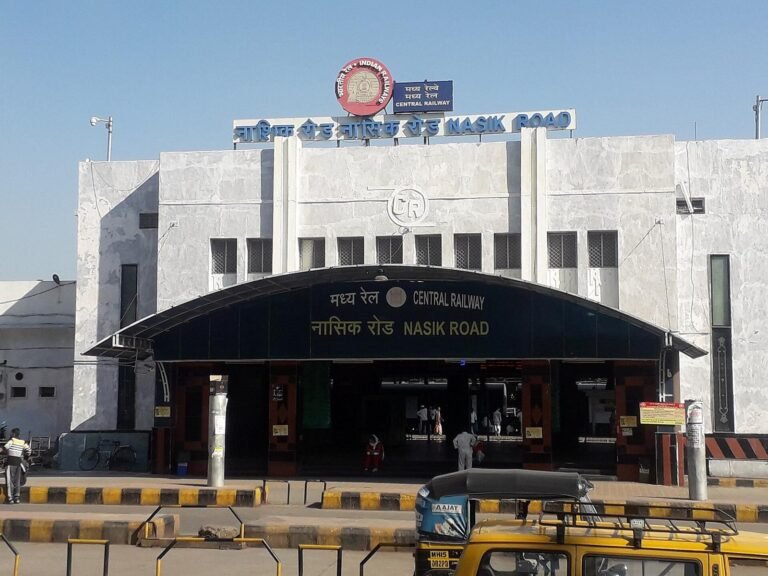
| Nearest railway station | Nashik Road, about 10 km | Nashik Road, about 39 km from the temple |
The akhara arrangement dates from the Peshwa period, according to the Nashik district. The Amrit Snan dates are in the Kumbh Mela Authority’s plan of June 2026, which it marks as interim.
Which centre suits you
Choose Ramkund if
- You want a city base. Ramkund is inside Nashik, about 10 km from Nashik Road station.
- Your family’s practice is linked with Rama or with the Vaishnava akharas. By tradition, Rama, Sita and Lakshmana spent much of their exile at Panchavati, around Ramkund.
- You plan to immerse the ashes of a relative at the Asthivilaya Tirth.
- You want the third Amrit Snan on Saturday 11 September 2027.
Choose Kushavarta if
- Your visit centres on Trimbakeshwar, one of the twelve Jyotirlingas. Devotees bathe at Kushavarta before going to the temple.
- You follow a Shaiva or Udasin tradition, whose akharas bathe here.
- You want the third Amrit Snan on Sunday 12 September 2027.
- You are comfortable in a small temple town. The Kumbh Mela Authority’s plan notes the hilly terrain, the narrow ghats along the Godavari and in the Trimbakeshwar region, and the limited land for facilities and parking.
Neither centre is a single ghat you can walk straight into on a main bathing day. Parking, shuttle buses and walking routes will decide how close you get; why Nashik and Trimbakeshwar are two Kumbh centres covers the road between them and the authority’s movement plan. The plan also proposes accessible ghats, and dates away from peak periods, for older people and people with disabilities; the details had not been published when we checked. If you still cannot decide, base the choice on where you will stay and how far each person in your group can walk, as in how to choose a stay by walking distance.
Respect and notices at both places
Both are places of worship all year, not only Kumbh venues. Rites for the dead take place at Ramkund every day: keep your voice low, give families space and do not photograph them without asking. Works can close the ghats at short notice. In October 2026, ETV Bharat reported that Ramkund and the nearby ghats were closed to the public until the 31 October flag hoisting so that works could be finished, with dashakriya rites continuing at set spots. River levels close them too: in July 2026, after releases from the Gangapur dam, the Godavari crossed the danger mark in Nashik and the Ramkund area was to stay closed for two days, PTI reported. Check local notices before you go. Amrit Snan days usually draw the most pilgrims; follow police and mela instructions on the day.
For visiting details, read our pages on Ramkund, Kushavarta and Brahmagiri and Gangadwar, the Nashik and Trimbakeshwar ghats guide, and for the whole event, the Nashik Kumbh guide.
Plan your trip
Sources
18 sources · checked 19 Oct 2026
- Ramkund Nashik (District Nashik tourist places) · District Administration, Nashik ·
- Panchvati · Incredible India, Ministry of Tourism, Government of India ·
- Gazetteer of the Bombay Presidency, Volume XVI: Nasik (1883) · Government of Bombay, Government Central Press (compiled under James M. Campbell); scan by Cornell University Library on the Internet Archive ·
- Gazetteer of the Bombay Presidency, Volume XVI: Nasik (1883), Nasik town: bathing places, holy pools and pilgrims (pp. 524 to 531) · Government of Bombay, Government Central Press; scan by Cornell University Library on the Internet Archive ·
- Kushavart Tirtha, Trimbakeshwar (District Nashik tourist places) · District Administration, Nashik ·
- Trimbakeshwar Darshan Feri - Brahmagiri Pradakshina · Incredible India, Ministry of Tourism, Government of India ·
- Gazetteer of the Bombay Presidency, Volume XVI: Nasik (1883), Trimbak (pp. 650 to 655) · Government of Bombay, Government Central Press; scan by Cornell University Library on the Internet Archive ·
- Gazetteer of the Bombay Presidency, Volume XVI: Nasik (1883), the Sinhasth at Nasik and Trimbak · Government of Bombay, Government Central Press; scan by Cornell University Library on the Internet Archive ·
- Trimbakeshwar · Department of Tourism, Government of Maharashtra ·
- Culture and Heritage: Simhastha Kumbhamela, the Nashik-Trimbakeshwar Kumbh and its astrological aspect (Nashik district) · District Administration, Nashik, Government of Maharashtra ·
- Kumbh Mela Plan (First Edition), Nashik Trimbakeshwar Simhastha Kumbh Mela 2027: schedule, framework, chapters and financial outlays · Nashik-Trimbakeshwar Kumbh Mela Authority, Office of the Divisional Commissioner, Nashik, Government of Maharashtra ·
- नाशिक कुंभमेळा 2026 : रामकुंड 31 ऑक्टोबरपर्यंत बंद; रस्तेही टप्प्याटप्प्यानं बंद करण्यात येणार (Ramkund closed until 31 October; roads to be closed in phases) · ETV Bharat Marathi ·
- Ramkund Nashik · Nashik District, Government of Maharashtra ·
- Kushavart Tirtha: Trimbakeshwar · Nashik District, Government of Maharashtra ·
- Trimbakeshwar Temple: Visitor Orientation · Nashik District, Government of Maharashtra ·
- Ramkund Nashik: How to Reach section (Nashik district) · Nashik District Administration, Government of Maharashtra ·
- Kumbh Mela Plan (First Edition): Nashik–Trimbakeshwar Simhastha Kumbh Mela 2027 · Nashik–Trimbakeshwar Kumbh Mela Authority, Office of the Divisional Commissioner, Nashik, Government of Maharashtra ·
- Nashik Rains: Godavari Crosses Danger Mark After Gangapur Dam Release · Press Trust of India (via Deccan Chronicle) ·
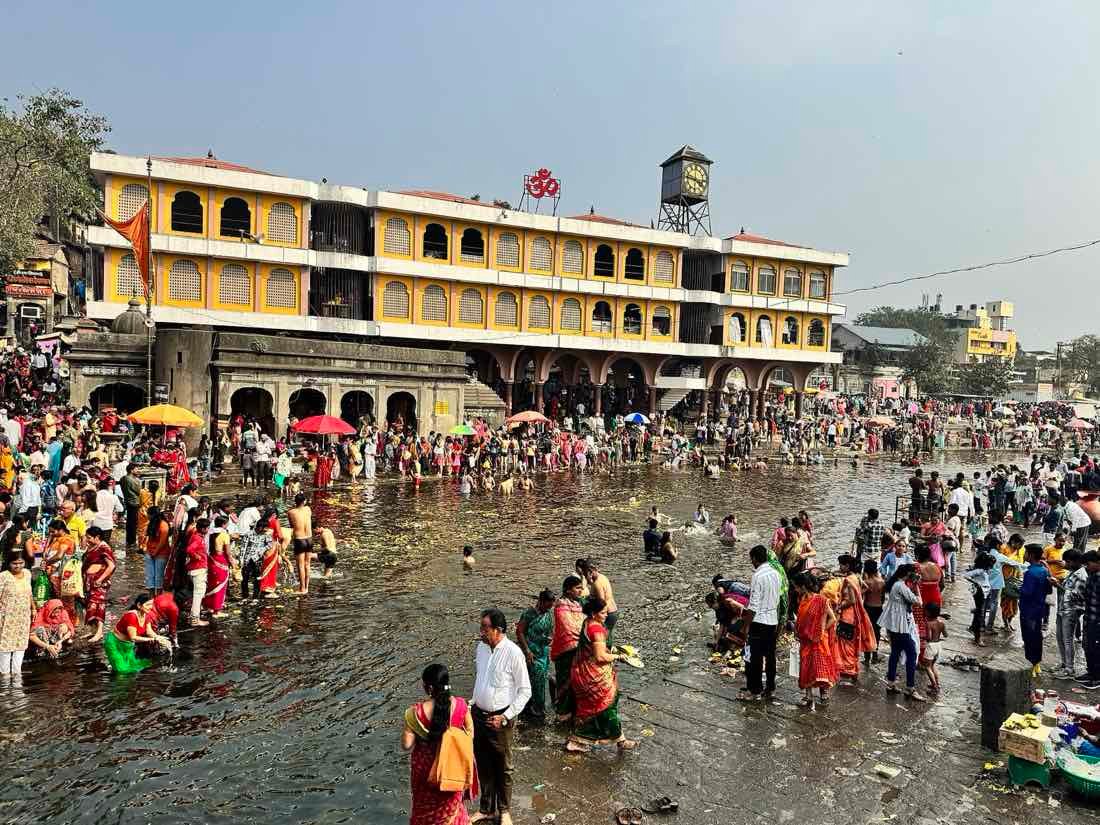 Photo: Rohit R Nashik, CC BY-SA 4.0