KMKumbhMela.info Editorial TeamChecked on Wed 15 Jul 2026
At Kumbh Mela, an Akhara is an organised religious body of ascetics, teachers and disciples. It is not simply a wrestling ground or a festival camp.
EvergreenChecked on Wed 15 Jul 2026
Akharas keep their lineages and disciplines going all year. At Kumbh, they take a visible part through worship, teaching, processions, camps and ceremonial bathing at set times. Current government Kumbh material lists 13 established Akharas of Kumbh Mela, from the Dashnami, Vaishnava Ani, Udaseen and Nirmal traditions.
What is an Akhara?
The word akhara has more than one meaning in India. It can mean a training ground, such as for wrestling. But at Kumbh it means a religious body of ascetics. An Akhara can have renunciants, teachers and disciples. It can also have monasteries (maths), temples, property, charity work and its own leaders.
Its Kumbh camp is temporary. The Akhara itself is not. This matters, because a visitor sees only one public moment in a much longer religious life.
An Akhara is also different from these related words:
An ashram is a place or community built around religious practice.
A math is a monastery or religious centre.
A sampradaya is a wider religious tradition or lineage.
A sadhu, sannyasi or vairagi is a renunciant, and is not always part of an Akhara.
A mahant holds a title of leadership or care, and the role varies.
A guru is a teacher and guide.
These words overlap. But treating them as the same hides how varied Kumbh’s religious bodies are.
The 13 akharas
Filter by tradition. Every card lists the sources for what it says.
An akhara is an organised order of ascetics, not a wrestling ground. Current government Kumbh material lists 13 akharas, the 13 main akharas of the Akhil Bharatiya Akhara Parishad: seven Shaiva Sannyasi, three Vaishnava Bairagi, two Udasin and one Nirmal.1,2,3
Shaiva Sannyasi akharasशैव संन्यासी अखाड़े. Seven akharas of Dashnami sannyasis whose favoured deity is Bhagwan Shiva, worshipped in a different form by each akhara.4,5,2
Vaishnava Bairagi akharasवैष्णव बैरागी अखाड़े. Three Ani akharas of Bairagi ascetics whose favoured deity is Bhagwan Vishnu, worshipped as Ram and Krishna; all three take Hanuman ji as their ishta devta (chosen deity).4,6,7,8
Udasin akharasउदासीन अखाड़े. Two akharas of the Udasin tradition, which the Prayagraj Mela Authority traces to Shri Chandra Dev, son of Guru Nanak, and whose followers mainly worship Om.4,5,9
Nirmal Akharaनिर्मल अखाड़ा. A separate akhara of the Nirmala tradition, which traces itself to Guru Nanak; Uttar Pradesh government material lists it apart from the Udasin akharas.2,10,11
Shaiva Sannyasi akharas
Juna Akhara
श्री पंचदशनाम जूना अखाड़ा
Shri Panchdashnam Juna Akhara
Seat
Hanuman Ghat, Varanasi
Deity
Bhagwan Dattatreya
Origin
By tradition, founded by Bhagwan Dattatreya and later reorganised by Adi Shankaracharya
Best known for its Naga sadhus; at Maha Kumbh 2025 it took the Amrit Snan together with the Avahan and Agni akharas.
It has a seat inside the Mahakaleshwar temple in Ujjain, and at Maha Kumbh 2025 it was the first akhara to take the Amrit Snan, together with the Atal Akhara.
At the 2021 Haridwar Kumbh its entry procession carried a silver palanquin of Bhagwan Ganapati, and at Maha Kumbh 2025 it bathed first, together with the Mahanirvani Akhara.
It keeps the tradition of the Chhari Yatra, a procession carrying a holy stick that stands for divine authority, according to a Government of India feature.
Like the other Ani akharas, its Bairagi ascetics wear white, with tulsi bead malas in place of rudraksha, and worship Ram and Krishna as forms of Vishnu.
The Guru Granth Sahib is read in the akhara every day, and instead of a city entry procession its ascetics arrive with a jakhira, a convoy carrying their camp supplies.
The order in which the akharas take the Amrit Snan, earlier called the Shahi Snan, is fixed for each Kumbh by the Akhil Bharatiya Akhara Parishad together with the mela administration. The bathing partners on these cards are past examples, so check the order announced for the mela you visit.4,5,28,40,41
Going to the Kumbh? Tirth.com can plan it for you. We are taking bookings for the Kumbh, with packages, our own people on the ground and help from your first call to the bath. Leave your number and our yatra team will call you back.
Stay and travel planned around your bathing day
Our own people on the ground at the mela
No payment to enquire
Calls between 10:30 am and 7:30 pm IST, usually the same working day.
Rivers and coast, simplified. Not a political map: no borders are shown. Natural Earth (public domain) and OpenStreetMap contributors. openstreetmap.org/copyright
Akharas at past Kumbhs
Prayagraj, 14 January 2025
The first Amrit Snan of Maha Kumbh 2025. Each akhara had been told its time and place in the order before the day.
1
MahanirvaniAtalopened the day, as per tradition
2
NiranjaniAnand
3
JunaAvahanAgni
4
Nirvani AniDigambar AniNirmohi Aniin the afternoon
5
Nirmalthe last to bathe
All India Radio and UNI, 14 January 2025
Haridwar, 14 April 2021
Har Ki Pauri was kept for the akharas that day, each in its allotted time slot. Every akhara had to finish before sunset.
1
NiranjaniAnandbathed first
2
Juna
3
Mahanirvani
PTI, 14 April 2021
At Nashik and Trimbakeshwar the akharas bathe at two places: the Vaishnava akharas at Ramkund in Nashik and the Shaiva and Udasin akharas at Kushavarta in Trimbakeshwar, by an arrangement the district dates to the Peshwas. The order for each Kumbh is set by the Akhil Bharatiya Akhara Parishad with the mela administration and does not carry over.
Credited photos from Ujjain 2016, Prayagraj 2019 and Prayagraj 2013.
An akhara procession, Simhastha 2016, Ujjain. Photo: Suyash Dwivedi, CC BY-SA 4.0, via Wikimedia CommonsA Juna Akhara camp, Kumbh Mela 2019. Photo: Ninara from Helsinki, Finland, CC BY 2.0, via Wikimedia CommonsSadhus with flags, Kumbh Mela 2013. Photo: Seba Della y Sole Bossio from Cordoba, Argentina, CC BY 2.0, via Wikimedia Commons
Is this list fixed for all time?
The 13 names form the established list used in the government material we checked. Kumbh today also includes women ascetics, women’s monastic groups and the Kinnar Akhara. Their part in the Kumbh is significant and should not be overlooked.
Some recent government articles say “13 Akharas” but also write about newer or separate groups. So we do not quietly swap a name in or out of the established list, and we make no claim about legal recognition. We describe newer groups in their own context, and we make clear which event and source we mean.
How did Akharas develop?
The Akharas’ own accounts often link how they were organised with Adi Shankaracharya, the teaching of scripture and the defence of religious life. These are important traditions. But no single account settles the exact founding history of all 13 Akharas.
Historians describe a more layered picture. Armed ascetics took part in pilgrimage networks, guarded religious property and served regional rulers. They also adapted to Mughal rule, East India Company rule and later colonial rule. Words such as yogi, gosain, sannyasi, bairagi and naga changed in meaning across regions and centuries.
This evidence does not support the popular claim that every Akhara was founded at one moment, for the single purpose of fighting Muslims. The scholar William R. Pinch shows that the history of warrior ascetics crossed religious and political lines. He also shows that the evidence is not enough to support such a simple origin story.
So, in short:
Akharas keep living religious traditions and the memory of their institutions.
Several have a martial side to their history.
Their written histories differ.
Origin stories should be credited to those who tell them, not shown as one agreed timeline.
The main traditions
Dashnami and Shaiva Akharas
The seven Shaiva Akharas are broadly linked with Dashnami and Shaiva renunciation. Several are closely tied to Naga Sannyasis, who are very visible during Kumbh. But being “Shaiva” does not make every member a Naga, or every Akhara’s practice the same.
Vaishnava Ani Akharas
Digambar Ani, Nirvani Ani and Nirmohi Ani belong to Vaishnava Bairagi traditions. Government Kumbh messages name them as an important part of the festival’s variety. Do not describe them in Shaiva terms just because Shaiva Naga processions get photographed more.
Udaseen Akharas
Bada Udasin and Naya Udasin are separate Akharas within the Udaseen tradition. Their names show a link between them. They are not one combined Akhara.
Nirmal Akhara
In the government account we checked, the Nirmal Akhara is linked with the Nirmala tradition and a monastic history with Sikh links. Showing it on its own is more accurate than forcing it into the Udaseen group.
What do Akharas do during Kumbh?
Run camps and religious life
Akhara camps are places for worship, teaching, meetings, serving food, training disciples and running the Akhara. Some areas are open to visitors. Others are private or have controlled entry. A camp is a religious place, not a theme-park show.
Join public processions
The Akharas’ entry into the mela, and their ceremonial processions, can be called Peshwai or Chhavani Pravesh, depending on the Akhara and the event. A procession can include flags, music, vehicles, horses, religious leaders, ascetics and the symbols of each tradition.
The order and route are carefully planned. For each Kumbh, they are worked out with the administration in charge. Never reuse an old procession route as a plan for a future visit.
Take part in ceremonial bathing
Akhara bathing is one of the most visible ceremonies at Kumbh. Some recent government messages call it Amrit Snan, while older or other material says Shahi Snan. We use the term the current event authority uses, rather than calling one label right everywhere.
The bathing order matters for the ceremony, and it also affects crowd control. Follow barriers, signs and announcements. Do not step into a moving procession or a closed ghat area.
Teach and meet disciples
Kumbh brings religious teachers, ascetics and disciples together in very large numbers. Talks, worship, debates, meetings and initiation can take place. But who can attend, and what stays private, differs. A public camp does not make every ceremony public.
Work with the event authorities
Akhara representatives work with the mela authorities on camp areas, processions, routes, timing, safety and services. These working links are for one Kumbh at a time. They do not make an Akhara a government department, or make KumbhMela.info a government website.
Photo: Suyash Dwivedi, CC BY-SA 4.0, via Wikimedia Commons
Akhara procession, Simhastha 2016
Words you will hear
Term
What it means
Naga Sannyasi
An initiated ascetic, linked especially with certain Dashnami and Shaiva Akharas
Mahant
A leader or caretaker; duties vary by Akhara
Mahamandaleshwar
A senior title used in several Akharas; not the same office everywhere
Peshwai / Chhavani Pravesh
Names for public arrival or entry processions, by event and tradition
Shahi Snan / Amrit Snan
Names for the Akharas’ ceremonial bathing; official use changes by event
Dharm Dhwaja
A religious flag linked with an Akhara or tradition
Sadhu Gram
A planned camp area for ascetics and Akharas at some events; the layout changes each time
Photo: Divyasingh04, CC BY-SA 4.0, via Wikimedia Commons
Sadhus with flags on a Shahi Snan night, Ujjain, 2016
Treat every camp as a religious space, and follow your host’s instructions.
Keep to gates, signs, barriers and the mela administration’s current rules on movement.
Ask before you photograph a person, a ritual, a living area or a sacred object.
Take silence or a gesture of refusal as “no”.
Do not touch flags, weapons, seats, altars, ash, hair or personal belongings.
Do not ask for a ritual, pose, blessing or display for social media.
Avoid sectarian comparisons, and questions about which Akhara is “highest”.
Keep clear of processions, and use only the public areas you are allowed into.
Do not assume that everyone in saffron belongs to an Akhara.
The Kumbh Snan Guide explains how bathing for the public differs from the Akharas’ ceremonial bathing.
Frequently asked questions
How many Akharas are there at Kumbh Mela?
Current government Kumbh material uses an established list of 13 Akharas. Kumbh today also includes newer or separate groups of ascetics. We describe them without quietly changing that list.
Are all Akharas Shaiva?
No. The list includes Dashnami and Shaiva, Vaishnava Ani, Udaseen and Nirmal Akharas.
Is an Akhara a wrestling school?
That is one common meaning of the word, but not the main one at Kumbh. Here it means an organised religious body of ascetics.
Are all Akhara members Naga Sadhus?
No. Naga Sannyasi is a specific initiated identity, linked especially with certain Dashnami and Shaiva Akharas. Akharas also include other ascetics, teachers, leaders and disciples.
Can visitors enter Akhara camps?
Some public areas can welcome visitors, while others are private or closed. Follow the current event plan, the signs and the host Akhara’s directions.
Why do Akharas bathe in a set order?
The order follows ceremonial tradition. It is also planned for safe crowd control. It can change by place and event, so follow only current guidance from the authorities.
About this page
We last reviewed this page on 15 July 2026. It is an Evergreen page: it explains a lasting tradition, not one event. The 13-name list comes from Uttar Pradesh government Kumbh material. We checked it against other government pages about the event. On history, we rely on university-press research by William R. Pinch and James G. Lochtefeld. UNESCO recognises Akharas and ascetic communities as bearers of the Kumbh tradition.
If an authority publishes a new list of the groups taking part, send us the dated source through Contact and Corrections.

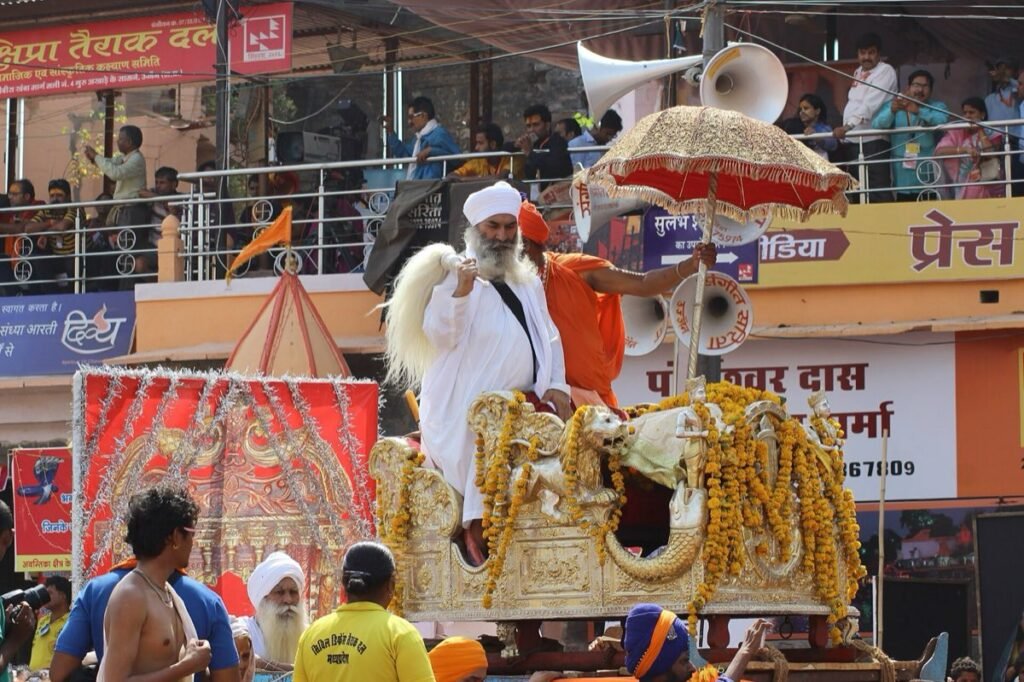
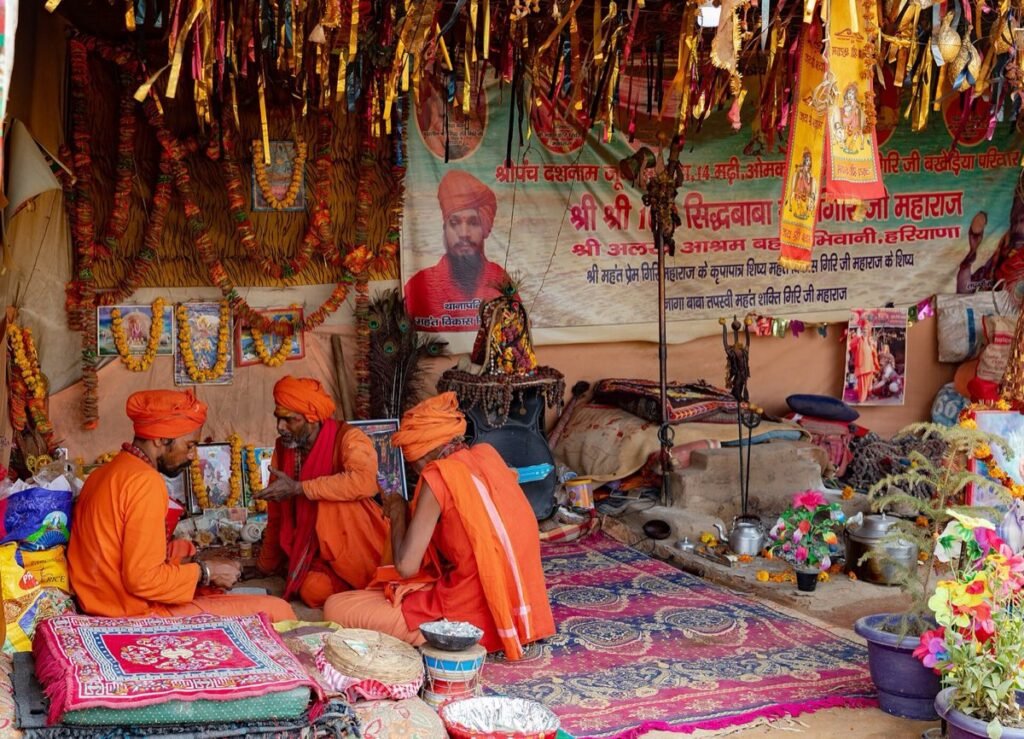
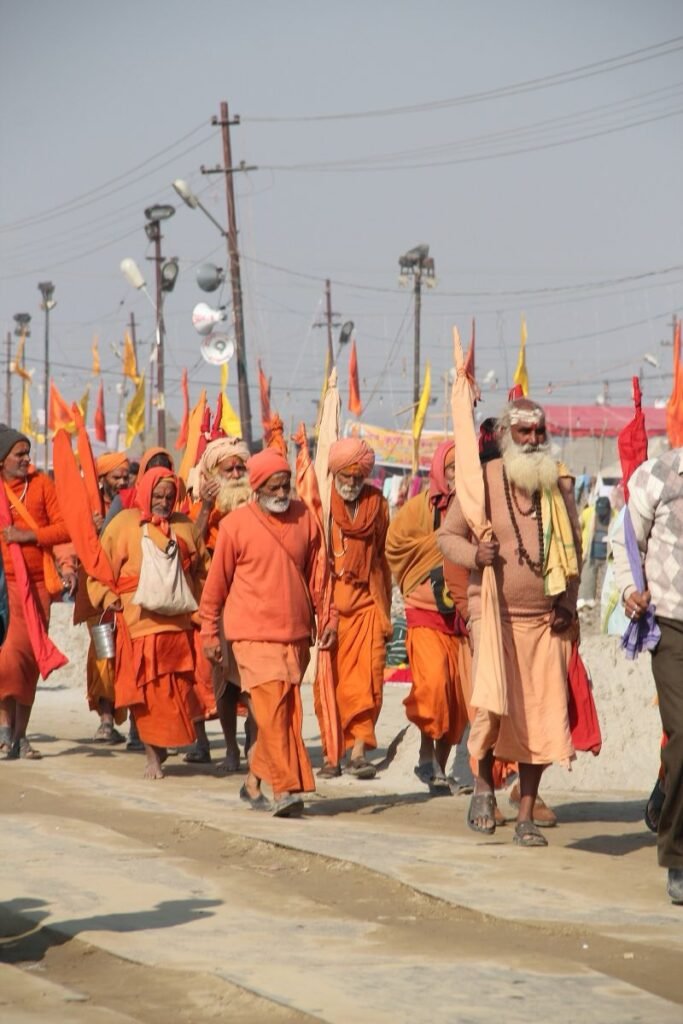
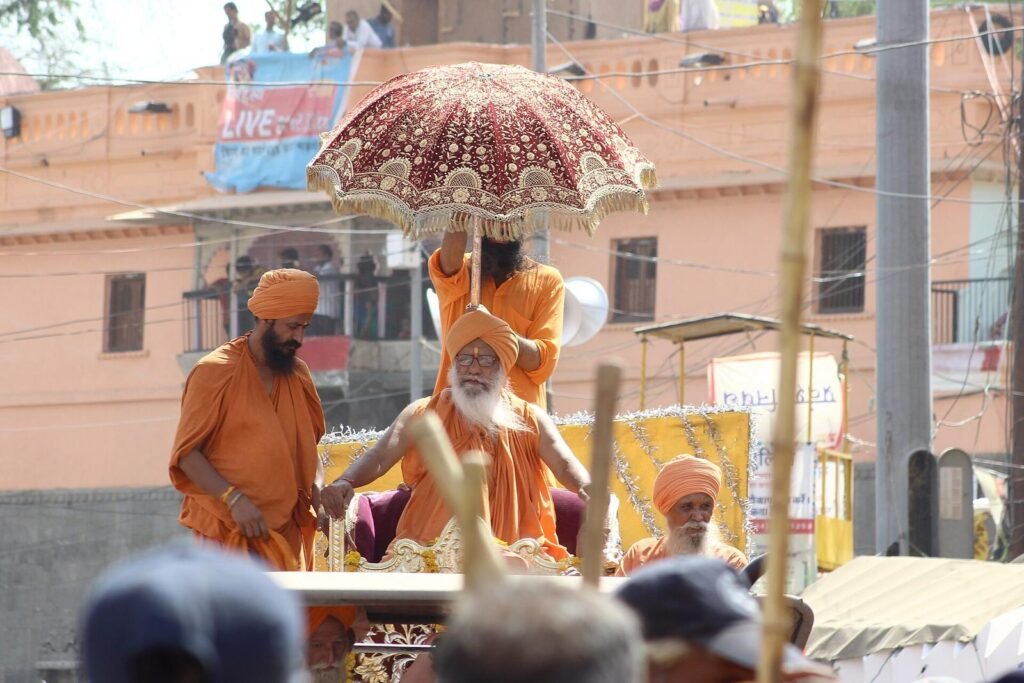 Photo: Suyash Dwivedi, CC BY-SA 4.0, via Wikimedia Commons
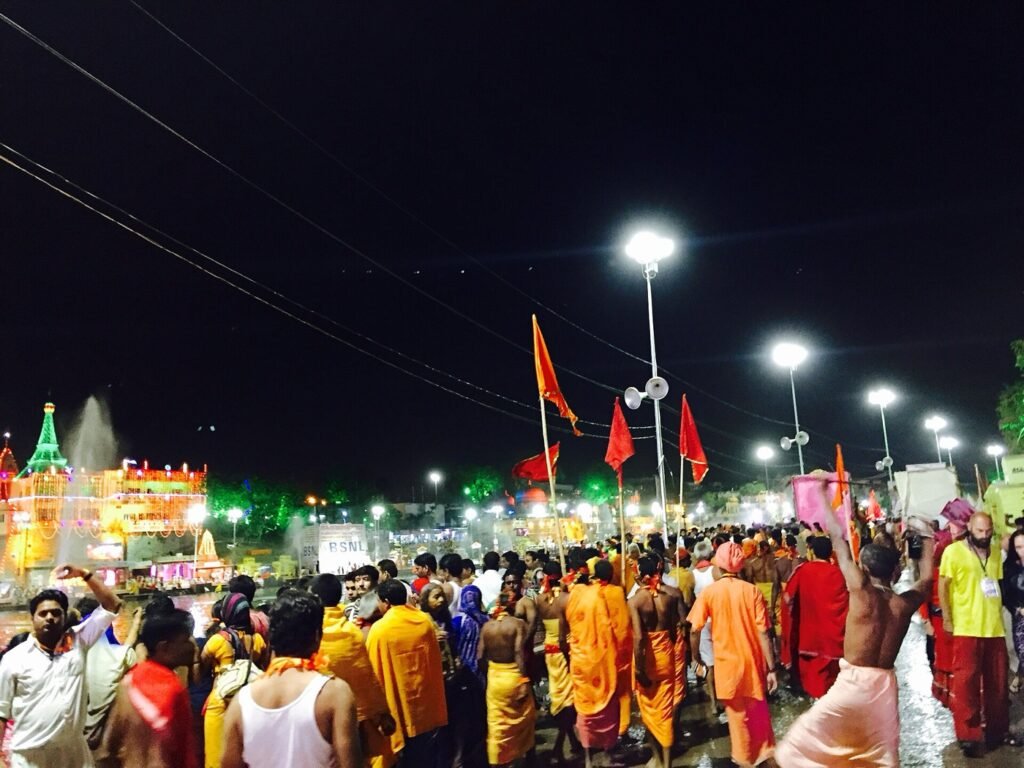 Photo: Divyasingh04, CC BY-SA 4.0, via Wikimedia Commons
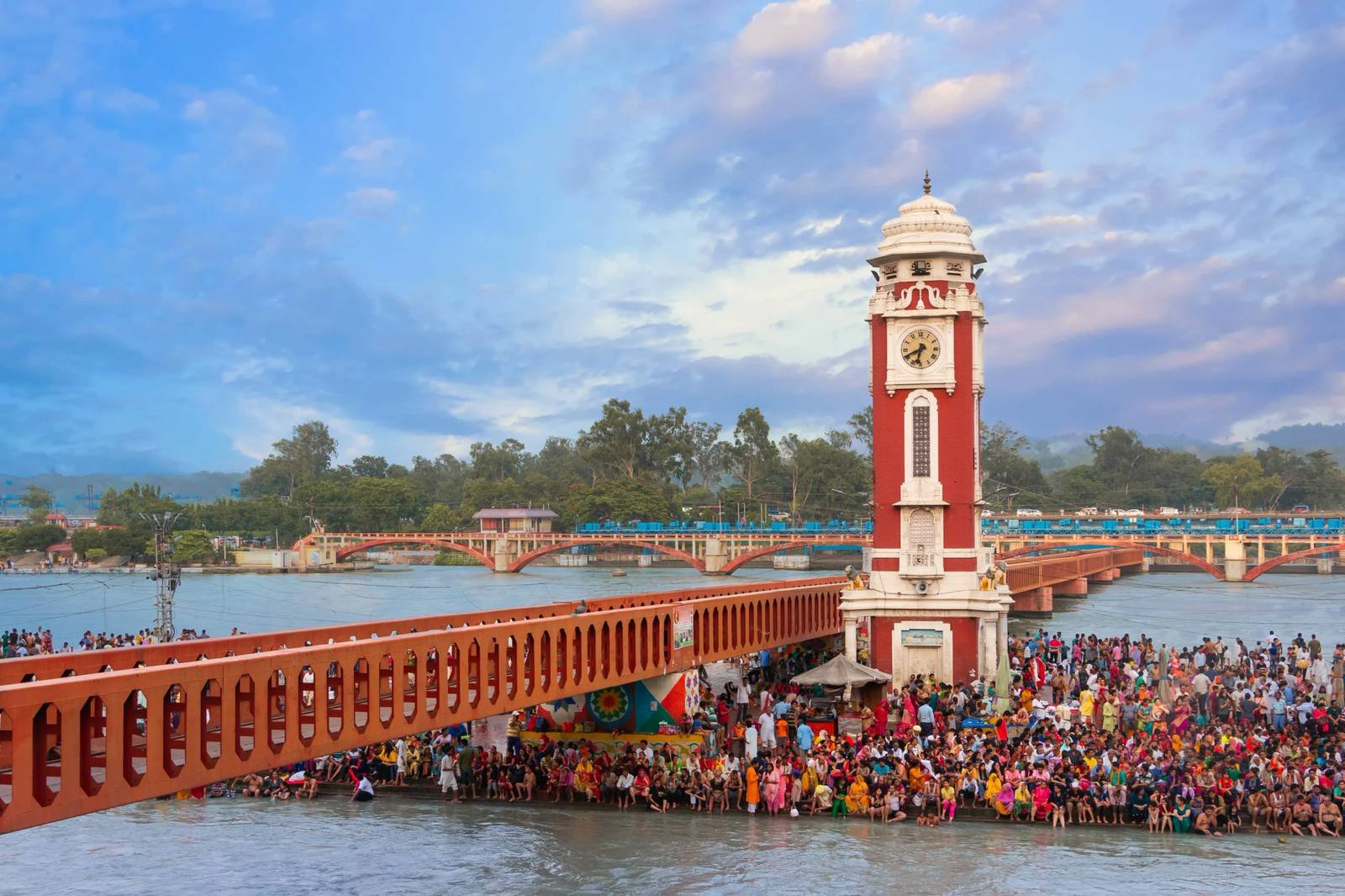 Photo: Tirth
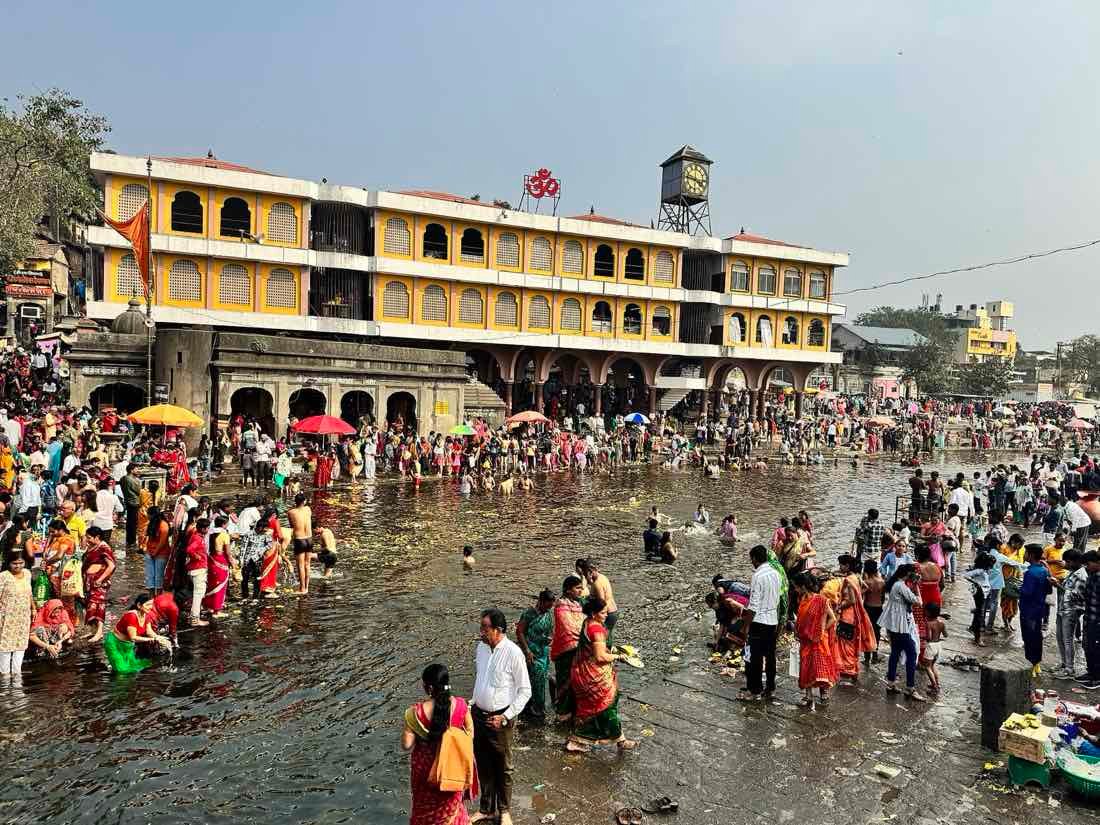 Photo: Rohit R Nashik, CC BY-SA 4.0
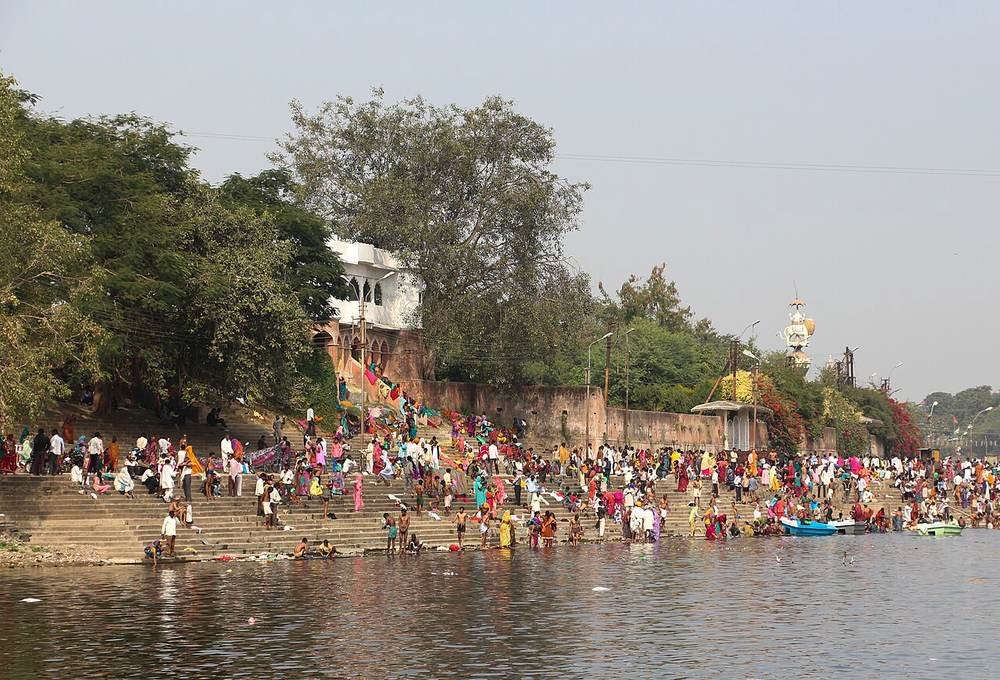 Photo: Bernard Gagnon, CC BY-SA 3.0
 Photo: Ninara, CC BY 2.0