Ascetic traditions are not visual props. A respectful photograph begins with consent, context and the possibility that the answer may be no.
Public visibility is not automatic permission
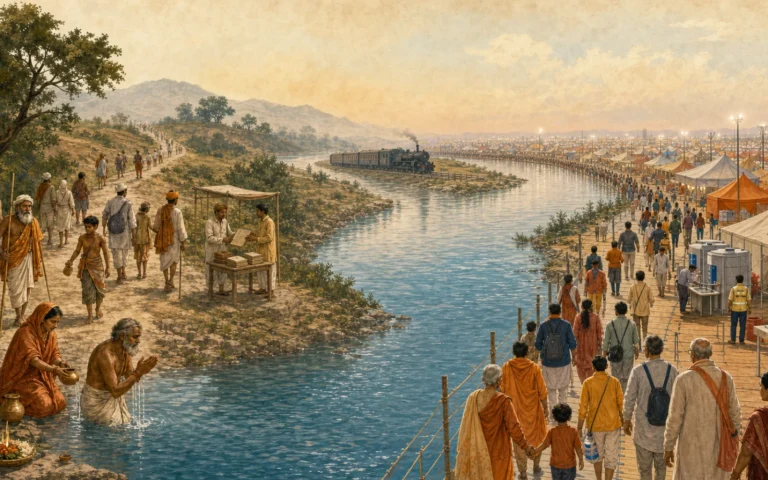
A person participating in a public Kumbh setting still has dignity and boundaries. A wide scene that records public context is different from a close portrait, a photograph during bathing, a private ritual or an image inside a camp.
Ask simply and accept the answer
Make eye contact where appropriate, indicate the camera and ask before moving close. Do not offer money to pressure someone, touch the person to pose them or continue after refusal. Language barriers are not consent.
Avoid the sensational frame
- do not reduce Naga or other ascetic traditions to nudity, ash or “exotic” appearance;
- do not invent a title, initiation, quote or spiritual claim for the person shown;
- avoid photographing distress, medical care or private prayer;
- do not photograph children without a responsible guardian’s permission;
- keep geolocation or camp details private when disclosure could create harm.
Caption what you actually know
If you cannot verify an akhara, role or ritual, use a neutral caption. Do not identify every ash-covered ascetic as a Naga Sadhu. The Naga Sadhu guide explains why terminology and context matter; the Akhara guide provides institutional background.
Put the camera away when needed
Safety instructions, movement, prayer and a direct request should always take priority. The best cultural record is not the closest image; it is one made without taking away another person’s agency or dignity.
Sources
- Spiritual Gurus — Akharas — Prayagraj Mela Authority, Government of Uttar Pradesh —
- God's Gateway: Identity and Meaning in a Hindu Pilgrimage Place — Chapter 6, Ascetic Life — Oxford University Press —
- Warrior Ascetics and Indian Empires — Cambridge University Press —