Independent Kumbh knowledge guide
Haridwar Kumbh
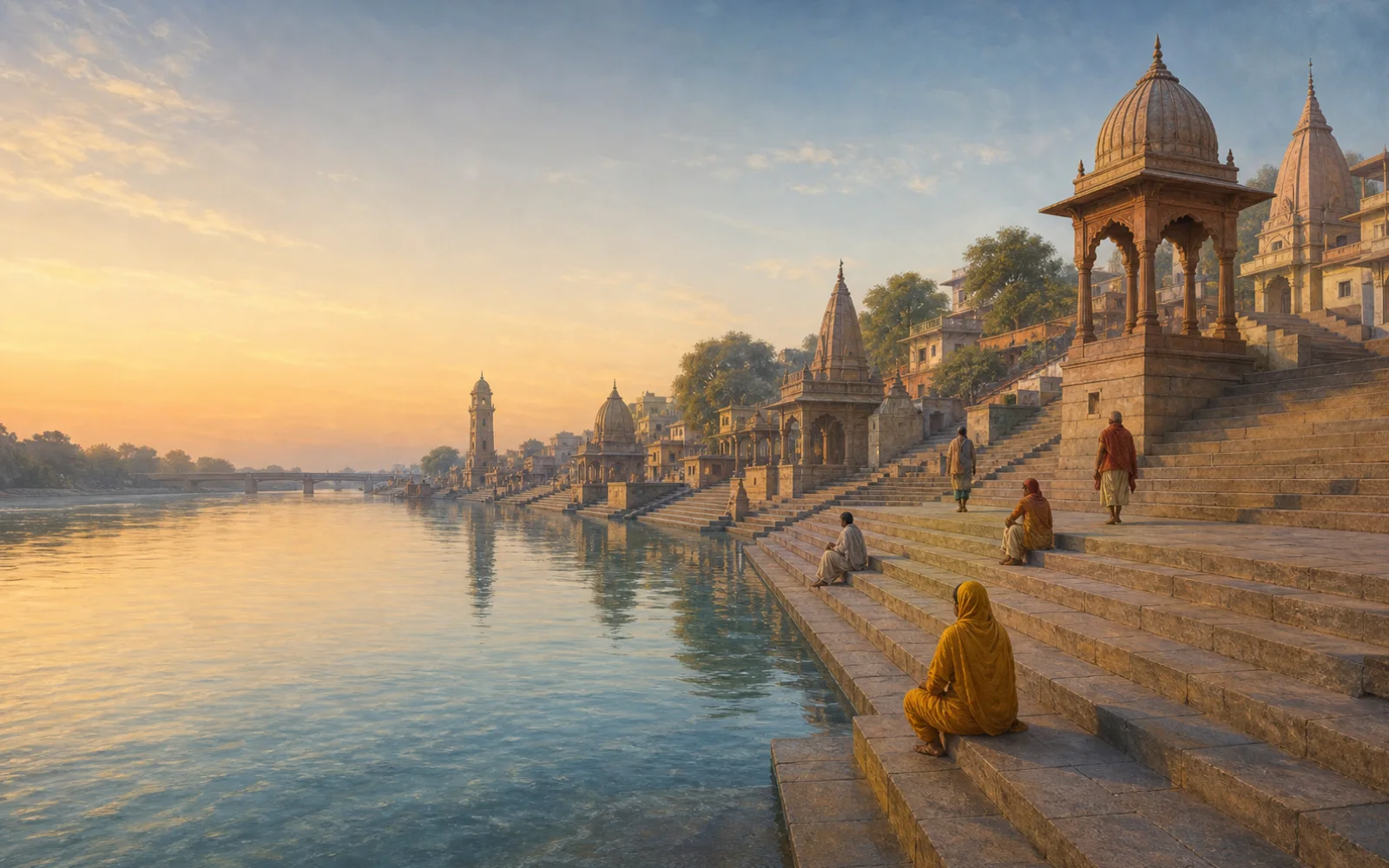
Haridwar Kumbh is the Kumbh gathering on the Ganga at Haridwar, with Har Ki Pauri and Brahmakund central to its public sacred geography. Haridwar is a living pilgrimage city throughout the year; Kumbh adds temporary camps, routes, controls and large-scale ceremonial bathing for one edition. This permanent page explains the place, not a current traffic or bathing plan.
Key facts
| Topic | Verified orientation |
|---|---|
| State | Uttarakhand |
| Sacred water | Ganga |
| Central public ghat | Har Ki Pauri, including Brahmakund in local tradition |
| Event language | Haridwar Kumbh; Ardh Kumbh appears in official cycle explanations |
| Permanent identity | Ganga pilgrimage city and gateway to the Himalayan pilgrimage region |
| Future status | No future Kumbh or Ardh Kumbh schedule confirmed in sources reviewed on 15 July 2026 |
Ganga and Har Ki Pauri sacred geography
Haridwar stands where the Ganga emerges into the plains. The river is the city’s defining Kumbh geography. Har Ki Pauri is a major public sacred ghat, and Brahmakund is central to the local Kumbh narrative.
District tradition connects the place with divine footprints, the amrita account and sacred bathing. These are religious beliefs and cultural memory, not archaeological or scientific claims. Daily worship and pilgrimage continue outside Kumbh, while authorised bathing areas, barriers and crowd routes expand or change during an event.
Why Kumbh is held at Haridwar
According to Kumbh tradition, the amrita kalasha was placed or nectar fell at Haridwar during the divine contest that followed Samudra Manthan. Official local sources connect this tradition particularly with Brahmakund at Har Ki Pauri.
Traditional timing explanations also relate Haridwar Kumbh to celestial configurations involving Jupiter and other bodies. Such an explanation describes religious calendrical logic; it does not independently confirm a date. Only the responsible authority can publish the event schedule.
See why Kumbh is held at four locations for the shared tradition.
History and cultural significance
Haridwar has long served as a Ganga pilgrimage and learning centre and as an entry point toward Uttarakhand’s Himalayan pilgrimage routes. District material records names such as Haridwar, Hardwar, Mayapuri and Gangadwar in different religious contexts. Precise ancient dates and origin stories require attribution.
The city’s ascetic life is especially important for Kumbh. James Lochtefeld’s study of Haridwar describes sanyasi, bairagi and Udasi orders, independent renouncers, Akharas, mahants and gurus. This diversity is more accurate than treating every ascetic as a Naga Sadhu or every institution as identical.
Major ghats and sacred sites
Har Ki Pauri and Brahmakund
The central public riverfront for Haridwar’s Kumbh identity. It can become highly controlled during major bathing periods. A normal-day visit description is not an event access promise.
Mansa Devi and Chandi Devi
These hill temples are important parts of Haridwar’s wider pilgrimage circuit. They are not substitutes for an authorised Kumbh bathing ghat, and ropeway or route information must be checked with current operators.
The wider Ganga riverfront
Haridwar includes multiple ghats and river channels. A future administration may distribute pilgrims across authorised areas. Never assume every accessible bank is safe or permitted for bathing.
Haridwar Kumbh and Ardh Kumbh terminology
Official cycle summaries associate both full Kumbh and Ardh Kumbh with Haridwar. Ardh Kumbh commonly describes the roughly six-year gathering between full cycles at Haridwar and Prayagraj. A specific event’s published title still takes precedence.
Do not import Prayagraj’s Maha Kumbh naming into Haridwar without an explicit Haridwar source. For the broader comparison, use the Kumbh terminology guide.
Previous and future event context
Status reviewed 15 July 2026: no future Haridwar Kumbh or Ardh Kumbh schedule is confirmed in the sources used for this page.
Older Haridwar editions may be discussed as history, but their visitor counts, routes, parking, ghats and helplines are archived. Do not calculate a future date from a six- or twelve-year interval.
The Kumbh cycle guide explains the difference between approximate recurrence and official confirmation.
Travel orientation
Haridwar is directly connected by rail and road. The nearest major air gateway is in the Dehradun region in current district guidance. Exact services and event diversions change.
Har Ki Pauri lies in a dense riverfront area where vehicle access may be restricted. Walking, parking, shuttle, ropeway and temple plans should be checked close to travel. Use only authorised bathing areas and follow police and mela announcements.
Frequently asked questions
Which river is Haridwar Kumbh held on?
The Ganga.
Is Har Ki Pauri the only ghat in Haridwar?
No. It is the best-known central sacred ghat, but Haridwar has a wider riverfront. Event authorities determine authorised bathing areas.
What is Brahmakund?
Brahmakund is the sacred area at Har Ki Pauri that local tradition connects with the amrita narrative and Kumbh bathing.
Does Haridwar hold Ardh Kumbh?
Official cycle explanations associate Ardh Kumbh with Haridwar and Prayagraj, but the exact name and dates of an edition require a current notice.
When is the next Haridwar Kumbh?
No future operational schedule was confirmed in the sources reviewed on 15 July 2026.
Sources and review status
Reviewed 15 July 2026. Stable geography is Evergreen; event status requires quarterly review. Sources include UNESCO, Haridwar district pages on Kumbh, history and Har Ki Pauri, the Garhwal cycle overview and James Lochtefeld’s Oxford study. Source IDs: SRC-UNESCO-001, SRC-MOC-001, SRC-HRD-001, SRC-HRD-HKP-001, SRC-HRD-HIST-001, SRC-GAR-001 and SRC-OUP-LOCHTEFELD-001.