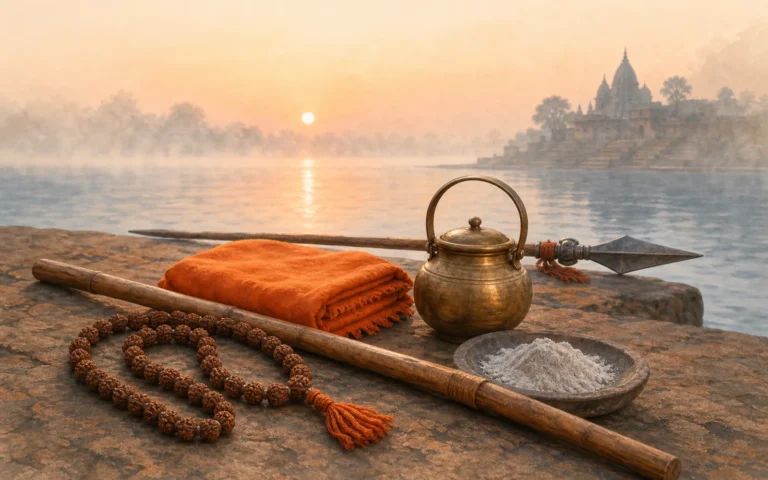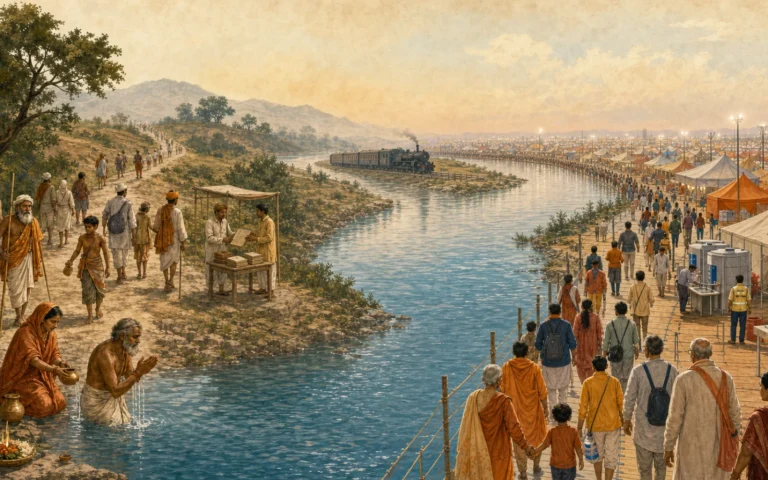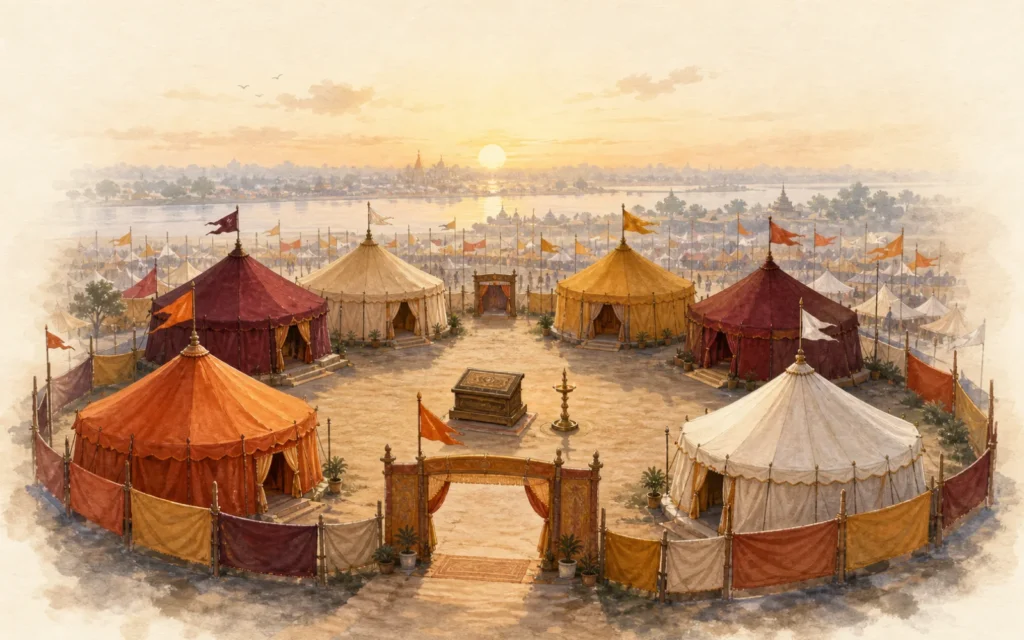
An akhara procession can be a major public expression of Kumbh institutional and ascetic life. It should be approached as a living religious context, not as a staged spectacle arranged for visitors.
Understand the institution first
Akharas are established ascetic institutions with histories, lineages, internal leadership and distinct traditions. Public accounts often focus on visual procession, but that is only one part of their religious and organisational role.
Expect controlled movement
Current authorities may create procession routes, holding areas, barriers and time-based access. Stand only where the public is permitted. Do not cross a moving group, block an entrance or follow into a restricted camp because other people are doing so.
Observe with dignity
- keep a respectful physical distance;
- do not touch ritual objects, animals or equipment;
- ask before taking a close portrait;
- never obstruct a person for a photograph;
- avoid sensational commentary about dress or ascetic practice;
- follow instructions from authorised stewards and police.
The exact order, route and public viewing arrangement for a future event must come from current authority information. Historical descriptions and previous-event media cannot confirm a 2027 procession plan.
Use the right background guide
Read Akharas of Kumbh Mela for institutional context and Naga Sadhus: History, Tradition and Role for respectful terminology. These permanent pages own the deeper topics; this article focuses on visitor conduct.
If the environment becomes compressed or movement changes, prioritise safety and leave the viewing point calmly. No photograph is worth blocking a religious procession or creating risk.
Sources
- Spiritual Powerhouses: Akharas at the Forefront of Maha Kumbh 2025 — Press Information Bureau, Government of India —
- Spiritual Gurus — Akharas — Prayagraj Mela Authority, Government of Uttar Pradesh —
- Warrior Ascetics and Indian Empires — Cambridge University Press —