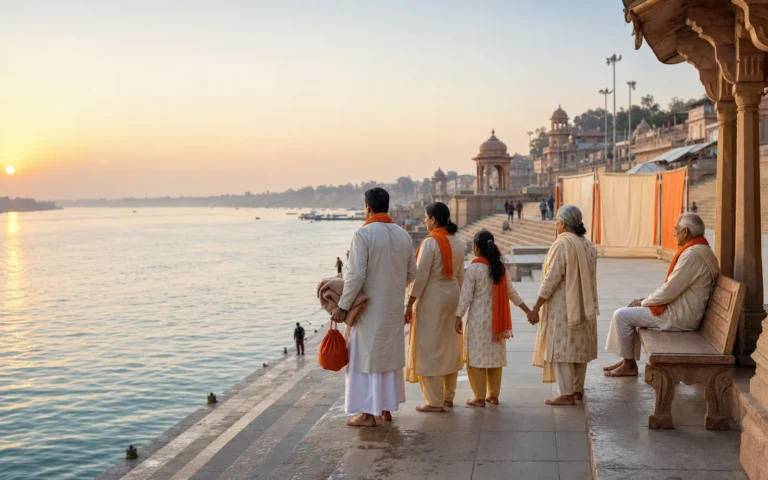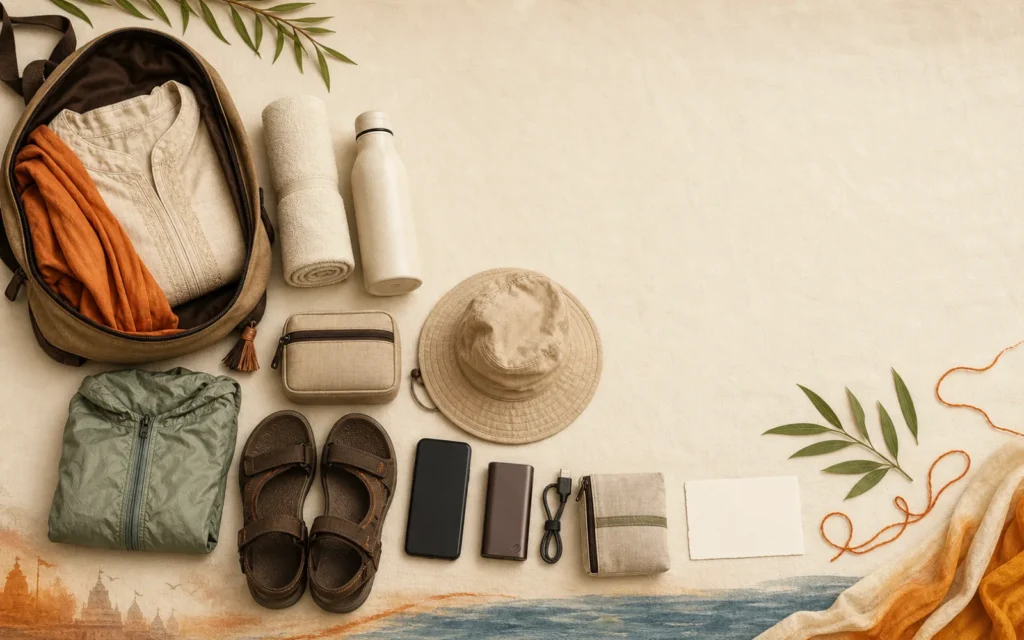
The pilgrimage does not end at the final photograph. A responsible departure protects the riverfront, reduces loss and turns personal observations into useful—but clearly limited—notes.
Leave the place ready for others
Use authorised waste and offering-collection points. Check the room, vehicle and resting place for plastic, medicine packaging, food waste, chargers and documents. Do not leave cloth, sharp objects or ritual material on steps or in the river.
Close the travel loop
- confirm every companion is present before leaving a transfer point;
- keep medicines and water available for the return;
- allow recovery time after a long crowd day;
- retain booking records only as long as needed;
- delete unnecessary copies of other people’s identity or medical information.
Record observations without turning them into facts
Write what you directly observed, where and when. Separate it from what another pilgrim said. A closed path on one afternoon does not prove a permanent route rule; a short queue at one moment does not establish a normal waiting time.
Submit useful corrections
If a KumbhMela.info page is wrong, provide the page URL, exact statement, reason and strongest current source through Contact and Corrections. Do not send private documents when a public authority URL is enough.
Share with care
Avoid posting identifiable images of bathing, distress, children or private ritual without consent. Caption uncertain places or traditions neutrally. The packing and conduct guide covers practical leave-no-trace habits, while the editorial policy explains how evidence becomes a correction.
A useful post-pilgrimage record is modest: it helps the next traveller without presenting one person’s experience as a universal route, schedule or religious rule.
Sources
- Do's and Don'ts — Maha Kumbh 2025 — Prayagraj Mela Authority, Government of Uttar Pradesh —
- Kumbh Mela — Representative List of the Intangible Cultural Heritage of Humanity — UNESCO Intangible Cultural Heritage —