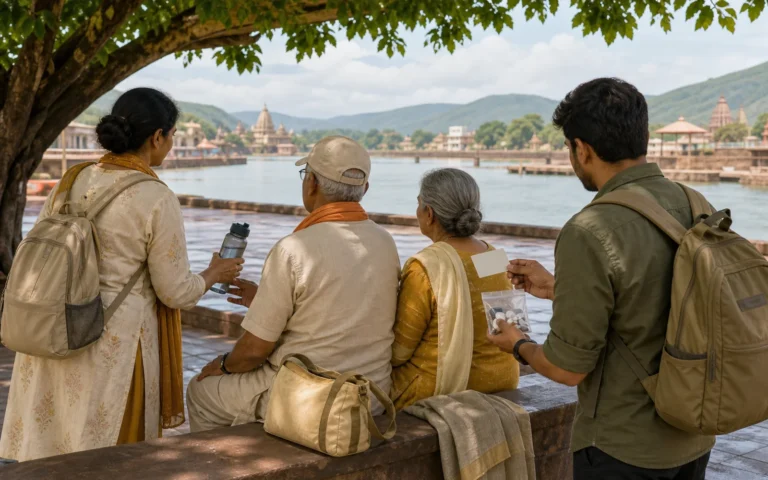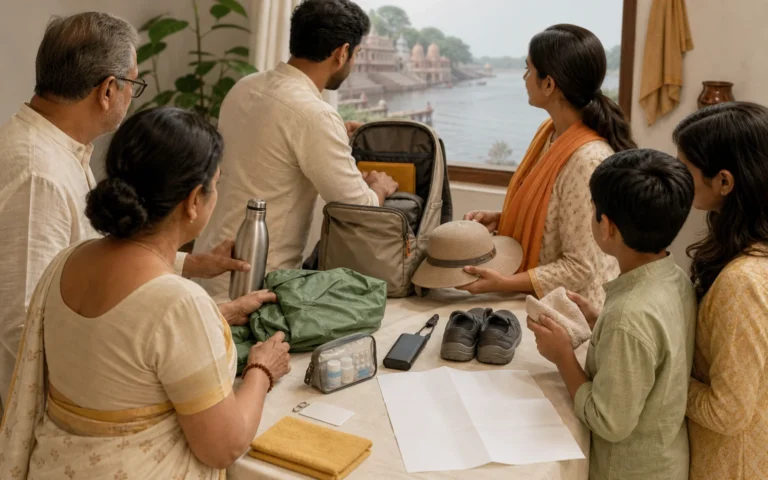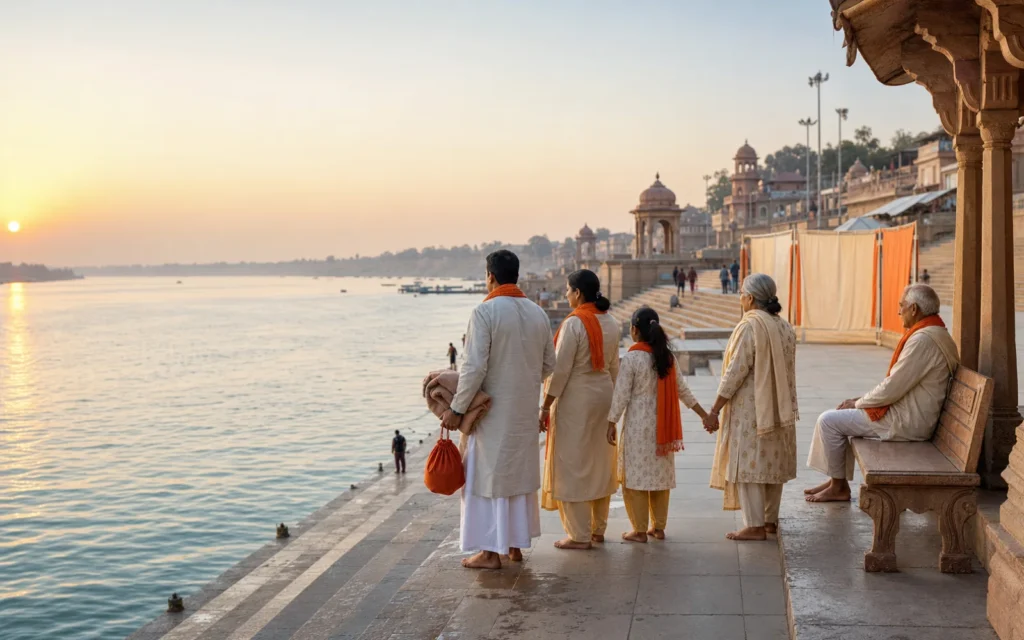
Heat and long periods of standing can turn a manageable Kumbh day into a health problem. Preparation should start before thirst, exhaustion or confusion appears.
Check the person, not only the temperature
Age, pregnancy, medicines, heart or kidney conditions, diabetes, prior heat illness and limited mobility can change risk. Ask a clinician about personal restrictions when needed. Public advice is not a substitute for individual medical care.
Build a cooler daily rhythm
- prefer a shorter outing over continuous exposure;
- use shade and scheduled rest before fatigue;
- wear light, practical clothing suitable for the setting;
- drink regularly according to personal medical advice;
- carry only a manageable load;
- do not skip prescribed medicine or meals to follow a crowd schedule.
Know when to stop
Concerning symptoms can include worsening headache, dizziness, unusual weakness, nausea, confusion, fainting or hot dry skin. Move to a safer cool place and seek current local medical help. Severe or rapidly worsening symptoms need urgent professional attention.
Keep information current
Use authorised weather and disaster alerts such as NDMA’s SACHET service where available. Event medical-post locations, water points and emergency contacts are dynamic; verify them from the responsible current authority rather than an old social graphic.
The safety and senior guide explains conservative planning, while the snan guide covers preparation near the water.
Hydration is a system
Water matters, but so do shade, rest, appropriate food, medicine timing and an early decision to leave. Do not force excessive water against medical advice, and do not wait until a vulnerable traveller is visibly unwell.
Sources
- Public Health Advisory — Extreme Heat and Heatwave — National Centre for Disease Control, Ministry of Health and Family Welfare, Government of India —
- SACHET — National Disaster Alert Portal — National Disaster Management Authority, Government of India —