Haridwar Kumbh Mela Guide
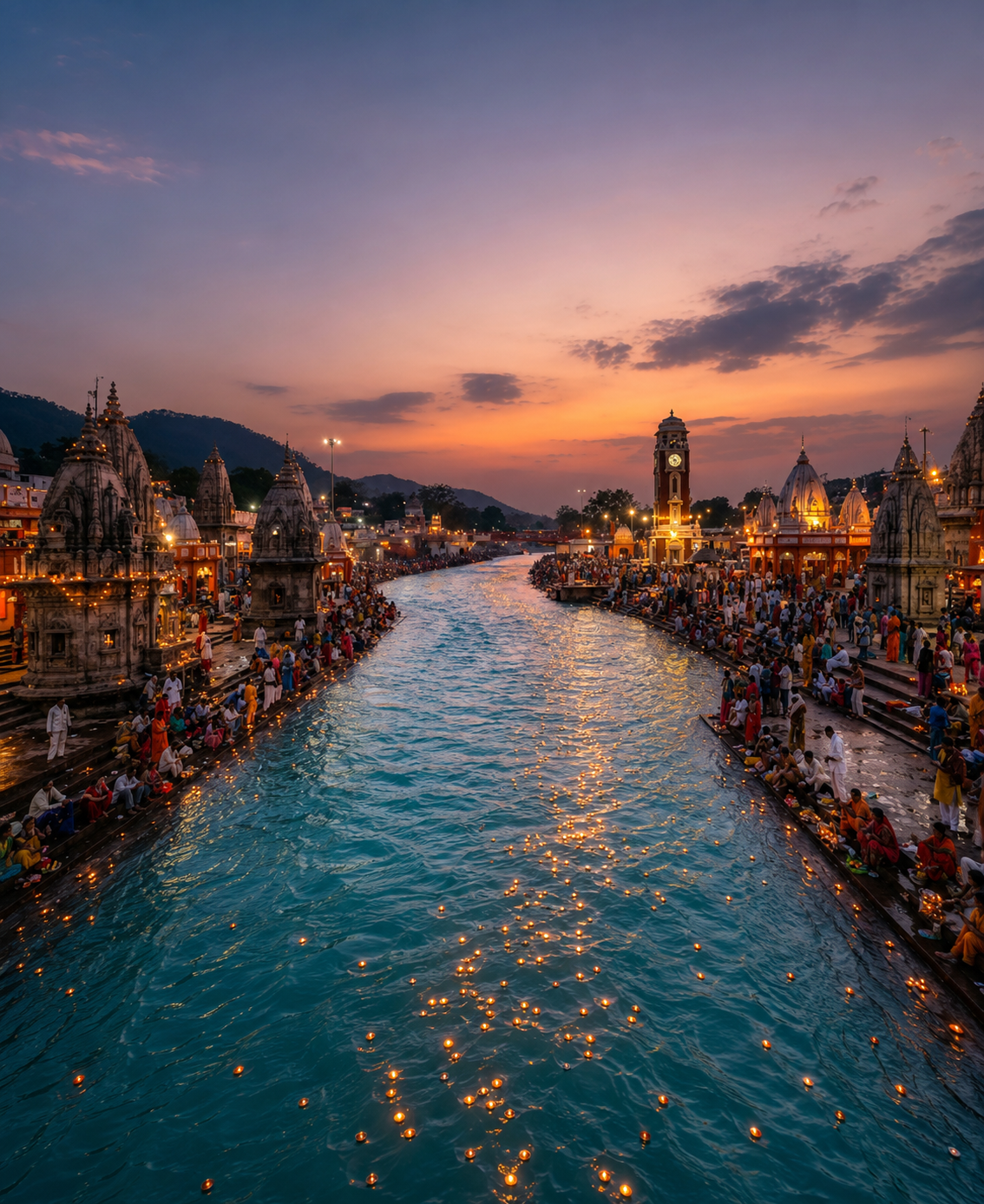
At the point where the celestial Ganga breaks free from the Shivalik Himalayas and meets the plains, Haridwar stands as the Gateway to the Gods. The Kumbh Mela here is a momentous celebration of faith, renewal, and the eternal flow of the river.
The Spiritual Gateway
Haridwar, literally Gateway to Hari, is where the Ganga ends its mountainous journey and enters the plains. In the Haridwar Kumbh, the river is experienced in its most energetic and youthful form.
The primary focus of the pilgrimage is Har Ki Pauri, the Steps of the Lord, believed to be the sacred spot where the celestial nectar fell. The ritual bath here is considered more than physical cleansing; it is a spiritual alignment with the cosmic cycle.
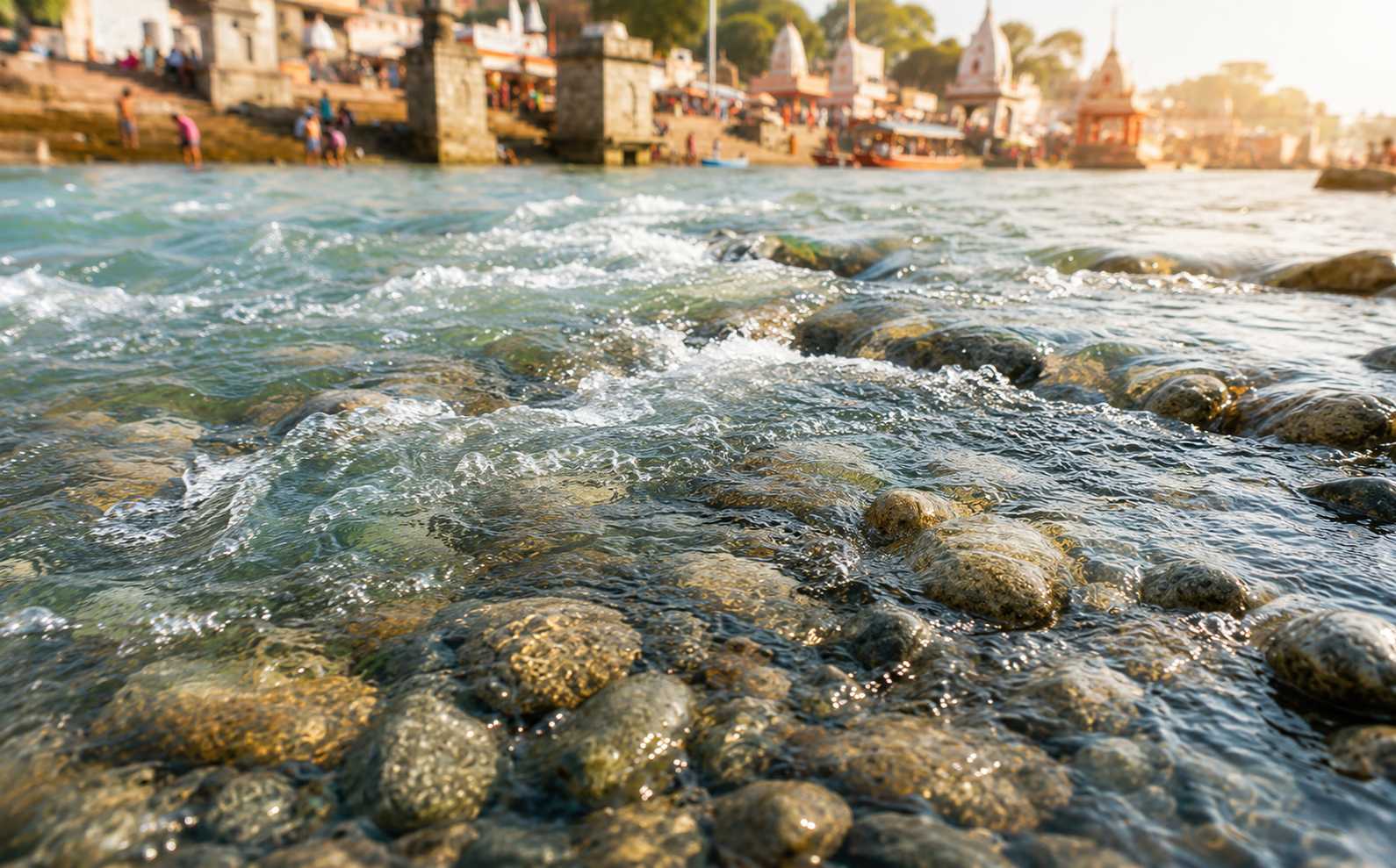
The cool and rapid current of the Ganga in Haridwar is believed to revitalize the spirit and wash away the burden of repeated cycles of birth and rebirth.
Origins and The Brahma Kund
The sacred history of Haridwar Kumbh is deeply connected with the legend of Amrit and the divine sanctity of Har Ki Pauri.
According to the Puranas, during the Samudra Manthan, Garuda flew over Haridwar with the pot of Amrit. A drop is believed to have fallen into the waters of the Brahma Kund at Har Ki Pauri.
Haridwar's Kumbh is unique because it follows the transit of Jupiter into Aquarius and the Sun into Aries. Historically, this sacred site has been a gathering point for sages from the Himalayan region, who descend to share wisdom with common pilgrims.
The Brahma Kund remains the most sacred inner part of the ghat. It is traditionally associated with Lord Vishnu, whose footprints are believed to be imprinted on a stone wall at Har Ki Pauri.
Sacred Geography
Haridwar’s sacred landscape is shaped by Har Ki Pauri, the flowing Ganga, hilltop Shakti temples and the spiritual rhythm of daily worship.
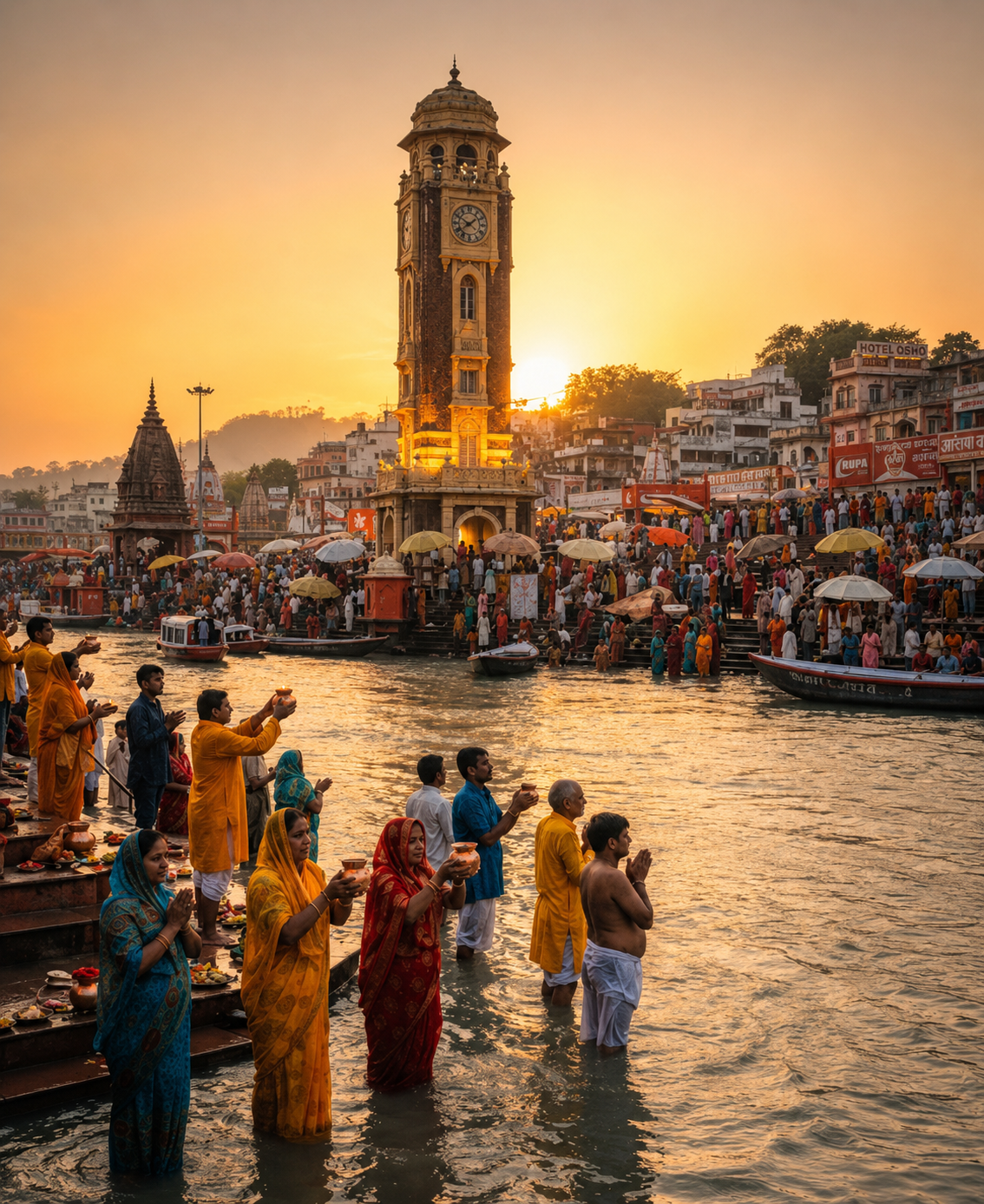
Har Ki Pauri
The epicenter of faith in Haridwar, known for the iconic Clock Tower, Brahma Kund and the daily Ganga Aarti ceremony.
Chandi Devi Temple
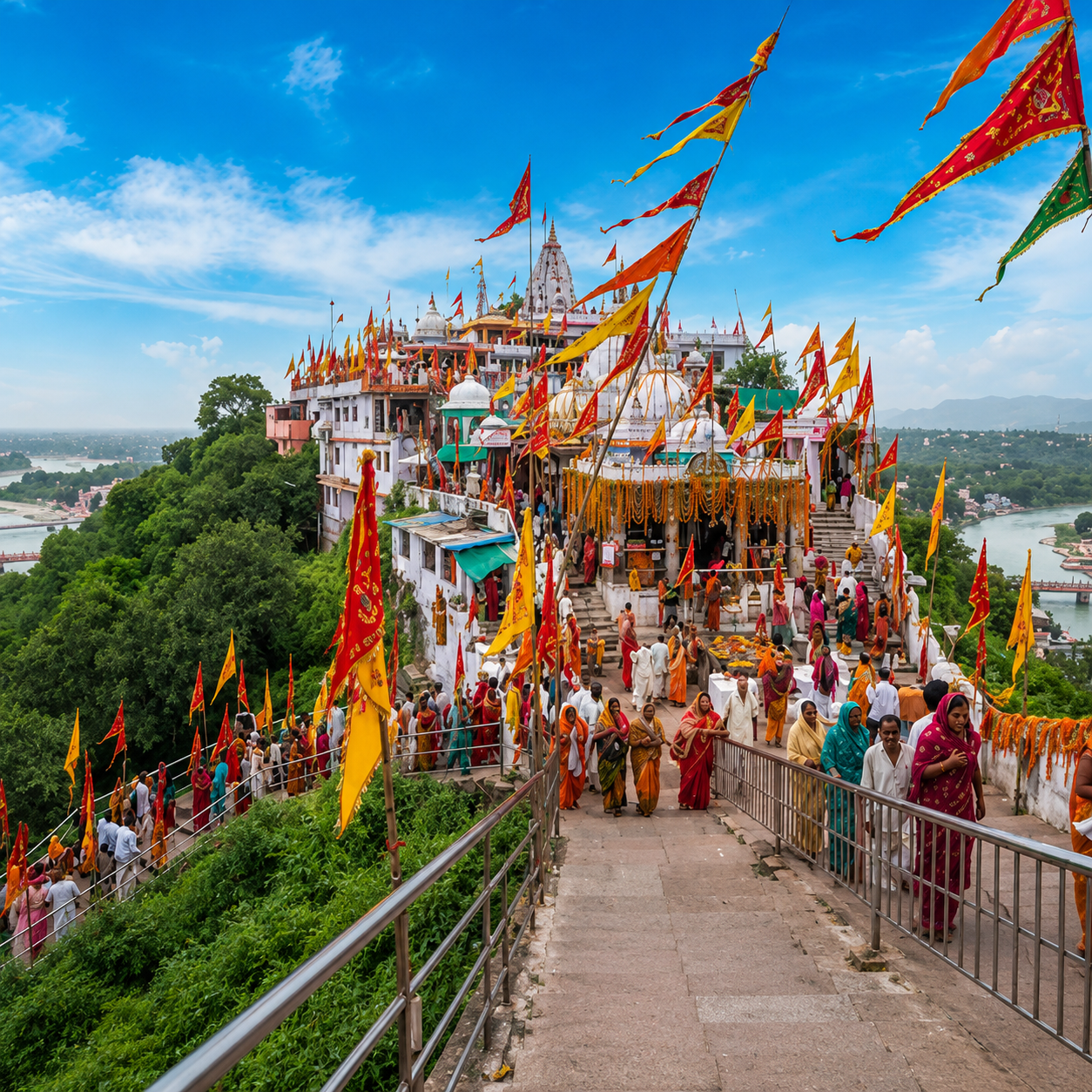
Perched atop Neel Parvat, this temple offers panoramic views of the Ganga, Haridwar city and the surrounding Mela grounds.
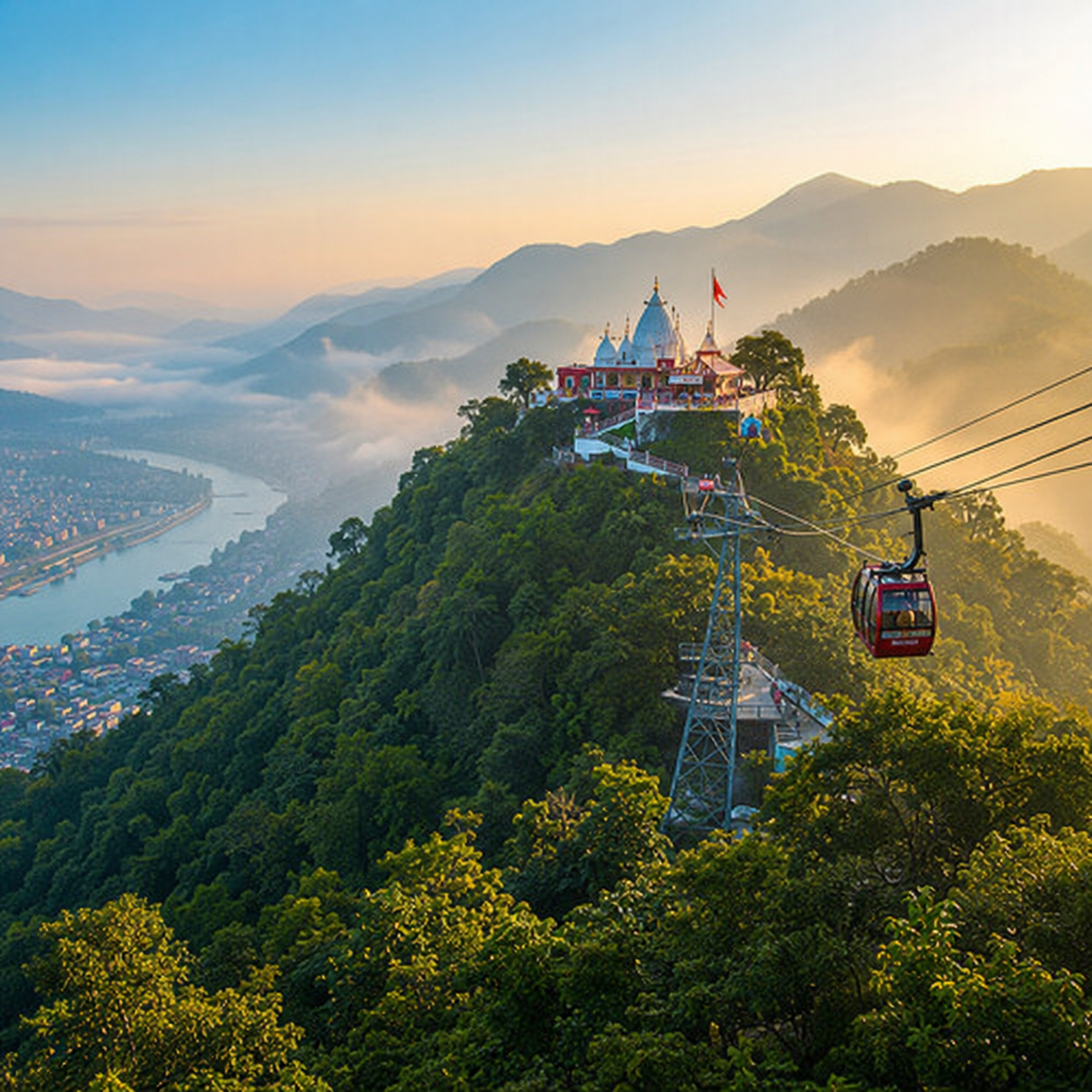
Mansa Devi Temple
The wish-fulfilling goddess residing on Bilwa Parvat, accessible through a scenic ropeway route or a traditional uphill walk.
Travel & Safety
Practical travel routes and important safety guidance for pilgrims visiting Haridwar, Har Ki Pauri and the Kumbh Mela area.
Travel Basics
-
↳
Connectivity
Haridwar Junction is well connected to Delhi, Mumbai and Dehradun. Special Mela trains usually operate during peak Snan days.
-
↳
Road Access
Haridwar is around 220 km from Delhi via NH58. During Kumbh, private vehicles may be diverted to satellite parking near city borders.
-
↳
Nearest Airport
Jolly Grant Airport in Dehradun is around 40 km from Haridwar and offers convenient air connectivity for pilgrims.
Safety & Awareness
! Cold Water Currents
The Ganga in Haridwar is fast and cold. Always use safety chains provided at the ghats and avoid moving into the middle of the stream.
! Crowd Movement
Follow one-way movement on bridges and avoid stopping for photos at crowded points, as this may create dangerous bottlenecks.
! Lost & Found
Identify the nearest Mela Police Chowki on arrival. Keep a physical tag with emergency contact details for children and elderly pilgrims.
Frequently Asked Questions
Quick answers to common questions about Haridwar Kumbh Mela, Har Ki Pauri, Ganga Aarti and pilgrim planning.
Why is Haridwar Kumbh unique? ⌄
Haridwar is the first point on the plains where the Ganga arrives from the Himalayas, making the river deeply sacred and spiritually vibrant. It is also the only Kumbh site located at the foothills of the Himalayas, giving it a distinct mountain-side spiritual atmosphere.
When is the next Haridwar Kumbh? ⌄
The full Kumbh Mela in Haridwar occurs every 12 years. The last Haridwar Kumbh was held in 2021, and the next Purna Kumbh is expected in 2033. Ardh Kumbh is held between the full Kumbh cycles.
What is the best time for Ganga Aarti? ⌄
The famous Ganga Aarti at Har Ki Pauri usually takes place twice daily, around sunrise and sunset. The evening Aarti is especially popular, so pilgrims should arrive early to find a safe and comfortable place.
Related Guides
Continue your Kumbh Mela learning with related guides on Prayagraj, Ujjain and the traditional Snan Vidhi.