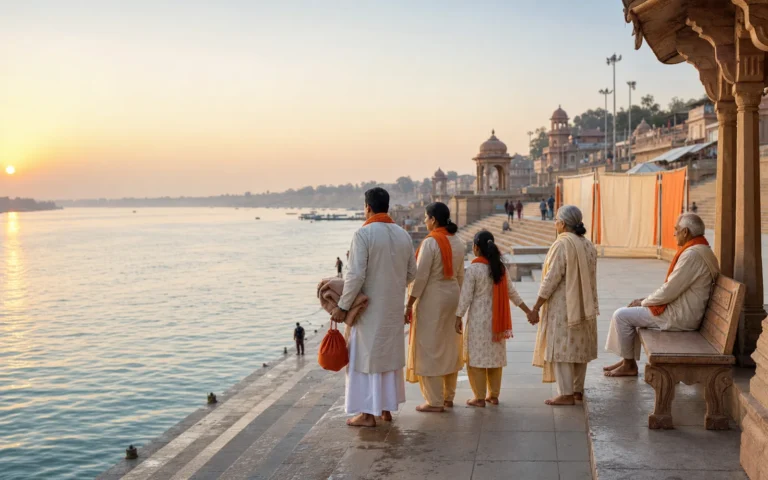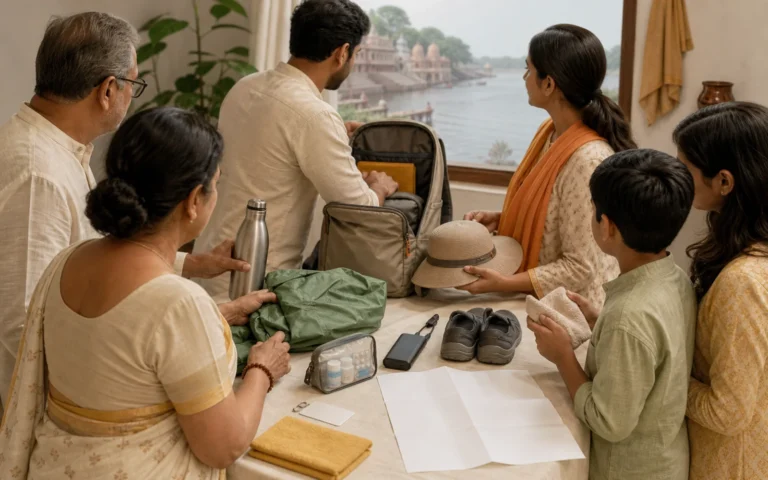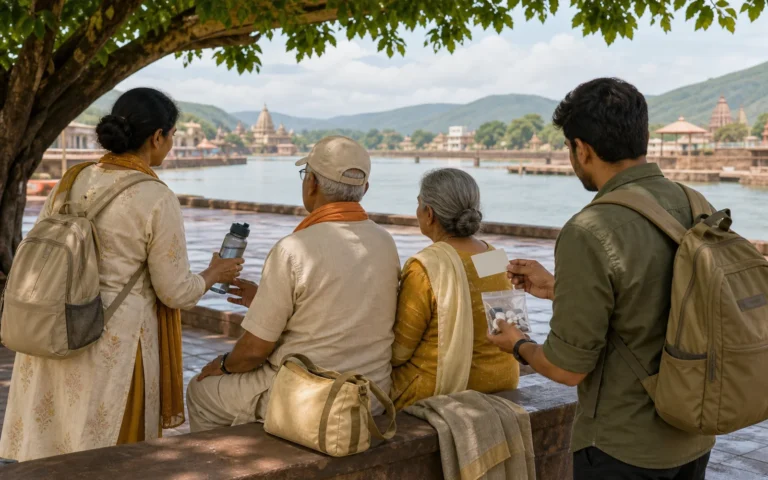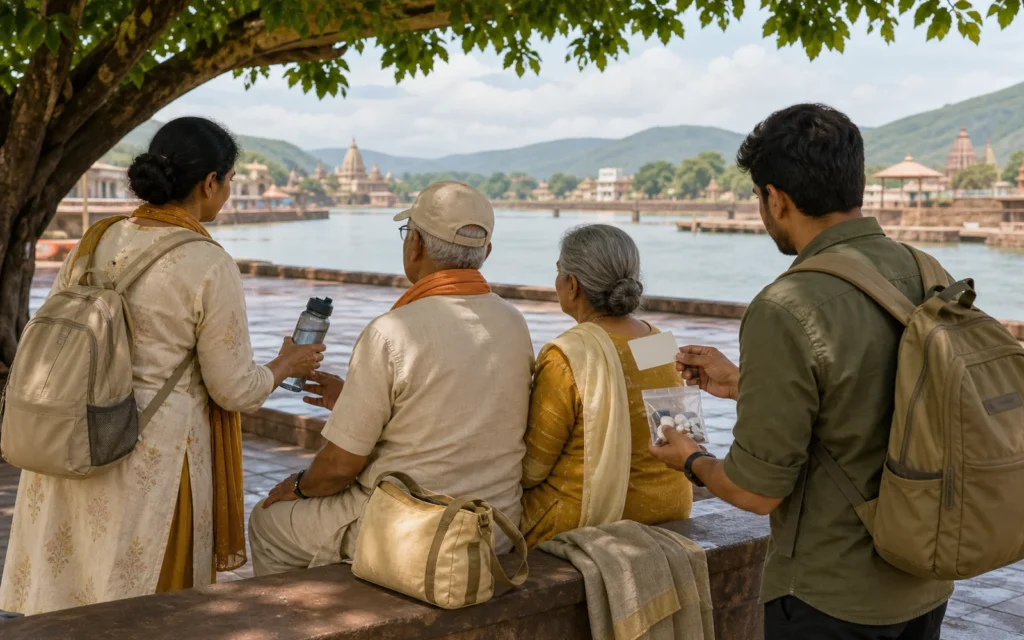
सुगम्यता को प्राथमिकता देने वाली योजना किसी एक “सुगम” लेबल से नहीं, पूरी यात्रा से शुरू होती है। परिवहन, वाहन बदलना, चलने की सतह, कतार, शौचालय, विश्राम, संवाद और पवित्र स्थल—हर कड़ी महत्वपूर्ण है।
वास्तविक जरूरत लिखें
क्या यात्री को सीढ़ी-रहित प्रवेश, चलने का सहायक उपकरण, बैठने की जगह, बार-बार शौचालय, छाया, संवाद सहायता, साथी, दवा का समय या छोटा भ्रमण चाहिए? “वरिष्ठ-अनुकूल” जैसा सामान्य शब्द वास्तविक योजना बनाने के लिए पर्याप्त नहीं है।
यात्रा की हर कड़ी जाँचें
| कड़ी | क्या जाँचें |
|---|---|
| आगमन | प्लेटफ़ॉर्म, स्टेशन या उतरने के स्थान पर सहायता और माँगने की प्रक्रिया |
| बीच का परिवहन | वाहन प्रवेश, बदलाव के बिंदु और पैदल दूरी |
| ठहराव | प्रवेश, लिफ्ट, स्नानघर, बिस्तर और आपात निकास |
| आयोजन क्षेत्र | सतह, ढलान, अवरोध, कतार और विश्राम विकल्प |
| वापसी | व्यावहारिक निकास और आराम की योजना |
उद्देश्य को उपलब्धता न मानें
समावेशन की घोषणा या स्वीकृत निर्माण परियोजना से कोई विशेष सुगम मार्ग या सेवा चालू सिद्ध नहीं होती। वर्तमान व्यवस्था, सहायता माँगने की प्रक्रिया, समय और जिम्मेदार सेवा प्रदाता जाँचें।
वैकल्पिक योजना रखें
मार्ग बदल जाए, सहायक उपकरण खराब हो, समूह अलग हो या यात्री थक जाए तो क्या करेंगे? जरूरी दवा, संपर्क और ठहरने का पता व्यक्ति या साथी के पास रखें।
नासिक सुरक्षा और वरिष्ठ गाइड तथा नासिक कैसे पहुँचें साथ पढ़ें। जिम्मेदार स्रोत पूरे दावे की पुष्टि करे बिना KumbhMela.info किसी मार्ग को सुगम नहीं बताएगा।
सम्मानपूर्ण सहायता
व्यक्ति या उसके सहायक उपकरण को छूने से पहले पूछें। यात्री से सीधे बात करें, निर्णय के लिए अधिक समय दें और किसी कानूनी अधिकृत प्रक्रिया के बिना सार्वजनिक रूप से दिव्यांगता सिद्ध करने का दबाव न बनाएँ।
स्रोत
- SACHET — National Disaster Alert Portal — National Disaster Management Authority, Government of India —
- Public Health Advisory — Extreme Heat and Heatwave — National Centre for Disease Control, Ministry of Health and Family Welfare, Government of India —
- About Nashik–Trimbakeshwar Kumbh Mela Authority — Divisional Commissioner Office, Nashik, Government of Maharashtra —